Saturday, April 23, 2022

Using YouTube as a Twitch Streamer


In the entry Streaming to More Than Just Twitch, we explored the idea of going live to multiple platforms in addition to Twitch every time you broadcast. In that entry, I mostly talked about the monetization side, such as how streaming without an Affiliate or Partner contract can still offer many of the same payout benefits. This time, I want to specifically cover YouTube, which I’ve found very useful as a Twitch streamer- whether affiliated or not. I’ve used YouTube in various capacities over the years for my different content offerings. Before starting on Twitch, I used to stream to YouTube. I also would upload several different types of weekly content, and I used YouTube embeds as the backbone of a larger website I ran at the time. Even in my time as a Twitch streamer, I’ve found many ways a YouTube channel can still come in handy, whether that means multistreaming to Twitch and YouTube simultaneously, posting directly to it, or using it for archive purposes. 


➢ ON THE AIR


It's possible to use your existing content
to make more content. 

The first thought for most Twitch streamers using YouTube is to re-edit previous livestreams into short, entertaining videos. This can bring in a whole new audience that may not have seen you on Twitch, and diversifies your content offering. Maybe someone doesn’t have the patience to watch a 5-hour long Overwatch stream, but they love seeing little 1-minute compilations of your best plays of the week. It’s also popular for streamers to build their own tutorial series, motivational videos, or regularly scheduled vlogs. All these things can bring in totally new audiences or strengthen your existing one by offering a change of pace. Just make sure you’re not biting off more than you can chew- the editing time alone for content like this may take you by surprise. You can find more thoughts on how to build this kind of satellite presence in the entry
Expanding Your Twitch Brand. 


If you want to make it even easier to build a YouTube presence for your streams, you could of course just go live on YouTube. Many streaming software suites, as well as intermediate web services like Restream, offer the option to go live on multiple platforms at once. It’s even possible to funnel YouTube comments into your Twitch chat through automated tools, so you have everything in one place. Going live to two platforms instantly puts your shows in front of more potential viewers. But this benefit doesn’t come free- it also creates a bit more work in the setup time and troubleshooting of your streams. You’ll have to remember to change the show title, description, tags, thumbnail and more for each show on YouTube, on top of what you already do on Twitch, for example. If you’re a Twitch Affiliate or Partner, this option is also unfortunately off the table. Twitch limits those under contract to their own platform while live on Twitch. 


➢ AFFILIATE-FRIENDLY OPTIONS


Even if you’ve already signed a monetization agreement with Twitch, you still have many choices when building a YouTube presence. All the video montage, vlog, and other edited examples from earlier are totally fine to post on YouTube while under contract with Twitch. You can also post any short highlights or clips created from your streams directly onto YouTube. Twitch even has automated tools to help you with that. Within the Video Producer screen of your Dashboard, click the three dots to the right of any highlight or stream, and you’ll see an ‘Export’ option. This will allow you to send a video from your Twitch channel directly to YouTube, without having to download and post it manually. 


If you’re feeling really ambitious, you can technically still stream to YouTube, even as a Twitch Affiliate. As long as the show isn’t going to Twitch at the same time, you’re totally free to go live wherever else you choose. Of course, this would mean essentially creating a whole new set of bespoke live content for your YouTube channel, but if you feel that helps your brand it can be a strong option for building community, who might then later check out your Twitch streams. 


If you're playing this series, there's going to
be more than two months between when
you play the first game and the latest one.

And finally, I personally love to use YouTube as a permanent stream archive. Unless you highlight every one of your shows after it ends, they will only be saved for a maximum of two months on Twitch. But YouTube can host an unlimited amount of videos which never expire. Of course, when you stream without a Twitch contract, it’s possible to simply go live on YouTube along with Twitch. And then when the show is over, your broadcast will be automatically posted to your YouTube channel. Using the YouTube export feature on Twitch, you can even take advantage of this archiving feature as an Affiliate or Partner. You’ll just need to wait a day if you want to post a show in its entirety, as Twitch wants the full stream to be exclusive to its platform for 24 hours after broadcast. Your episodes can be organized into playlists, enhanced with extra information and tags, and given many more options for posterity than Twitch offers, like timestamped chapter markers and the ability for viewers to comment after the fact. I find this very useful when streaming story-based games. It’s nice to have an archive of the hundreds of Assassin’s Creed episodes I've done all neatly organized together. My Twitch viewers sometimes tell me about how they went back and binged a playthrough from years ago, or others who never knew my channel before will discover old episodes of mine that I’d forgotten about. Since starting my current Twitch channel, I’ve archived every Twitch stream I’ve ever done. They're all on my YouTube channel for posterity. As of now, that’s over 5,800 videos! 


➢ EXPANDING YOUR HORIZONS


YouTube can be very helpful as a satellite channel for a Twitch streamer. Because of the nature of our work, we’re already generating a huge amount of video content. Why not take that content, repurpose it, and use it elsewhere? Whether going live directly to both platforms, editing custom videos to be uploaded, or simply using it as a repository for your past shows, there’s a whole lot you can do with a YouTube channel as a Twitch streamer. So if you feel your Twitch channel is in a good place and you want to expand, YouTube is a great place to start. 


Friday, April 15, 2022

Expand on Your Stream Ideas


In 1937, the year The Hobbit was released, J.R.R. Tolkien began work on a sequel. This new Hobbit book was supposed to be the story of Bilbo, having used up all his treasure horde, looking for a new adventure. The publisher was happy with this pitch, as they’d have another popular children’s book to capitalize on the first one’s success. What they received, after 16 years and a huge amount of rewrites, was an entire trilogy about Bilbo’s nephew getting mixed up in a continent-wide geopolitical conflict and trying to prevent the devil from destroying the world. That’s a far cry from The Hobbit’s fumbling treasure hunter and the lessons he learns along the way. When reading these two stories it’s difficult to imagine how someone could be so creative when envisioning a way to expand on their invented universe. Tolkien was able to throw away almost everything about the original book and make its sequel completely unique. Is there a way we can harness that same creative power when improving our own content? I believe there is. 


➢ LOOK TO YOURSELF FOR INSPIRATION


When you re-read The Hobbit enough times, you start to realize something interesting. The DNA for The Lord of the Rings story was there all along. No, I don’t just mean the character names, locations and languages. I mean that Tolkien was able to return to his original story, which was filled with wonderful allusions to a larger universe, and extrapolate on those little sparks to ignite a much larger creative fire. 


Gollum was originally a 
nicer guy.

One excellent example of this is the “
Riddles in the Dark” chapter. Anyone who knows The Hobbit will remember this moment where Bilbo Baggins competes with Gollum in a deadly game of riddles. But did you know that this chapter was first published very differently than the version we know today? When releasing the original version of The Hobbit, Tolkien didn’t have a real idea of what the ring truly was, and as such there were many aspects of this encounter which played out differently. Gollum intended to give Bilbo the ring willingly as a prize for losing the game, and when he couldn’t find it he essentially shrugged his shoulders and led the hobbit out of his cave. It was only after The Hobbit was released, and Tolkien was thinking about a sequel, as well as the interesting ideas he might be able to extract from Bilbo’s magic ring, that he revised the scene. In the version we know today, Gollum is much more volatile and tortured by the ring’s corrupting powers, and would certainly never give up his ‘birthday present’ willingly. This updated edition was published, and that’s the version we have now. Then in another brilliant move, Tolkien actually decided to canonize the fact that his text was retconned. Since within the world of Middle-earth, the story of The Hobbit is meant to have been written by Bilbo Baggins himself, it’s revealed in The Lord of the Rings that this earlier published version of the Gollum chapter was actually a lie written by Bilbo to assuage his own conscience. What a cool way to expand on a story! 


➢ USING OLD IDEAS IN A NEW WAY


Tolkien applied those same principles for much of the story of The Lord of the Rings. No other chapters of The Hobbit were drastically changed like that, but small little details from Bilbo’s quest were used to flesh out this new one. And not just that- Tolkien had another trick up his sleeve. Decades before even The Hobbit was published, he had been working on a much larger project. This massive history of the gods and heroes of Middle-earth would eventually be known as The Silmarillion, but at the time it was simply a scattered collection of ideas and stories. After publishing The Hobbit, Tolkien actually wanted to finish and release The Silmarillion as his next book (a pretty jarring thought to anyone out there who has read it!) but the publisher thought it would be too much for readers to handle- and they were probably right. So instead, Tolkien used much of that saga’s texture to flesh out the books he worked on in its stead. When reading The Lord of the Rings, it’s amazing to consider how many folk tales, heroic legends, songs, poems and other pieces of fictional lore exist within its pages. It’s an astoundingly complete universe. And much of that was possible because Tolkien cannibalized his scrapped project to feed this new one. 


And the games based on Jackson's
movies are still great.

Similar to how Tolkien pulled much of The Lord of the Rings’ texture from his then-abandoned Silmarillion manuscript, Peter Jackson did the same when adapting his six film adaptations. Many of those who have only read the main texts of The Hobbit and The Lord of the Rings might be surprised to learn that there were several other stories written by Tolkien which took place during the events of Bilbo and Frodo’s quests. Jackson and company sourced from all these side stories, in addition to the main books, to make up his films. Some things were explicitly written about elsewhere, like much of Gandalf’s relationship with Thorin Oakenshield. Others were extrapolated from small clues and allusions in the original stories, like what happened at Dol Guldur. And many of Jackson’s choices stretched the source material to fit more with the story he wanted to tell. For example, Bard the Bowman, an extremely important character in The Hobbit, as well as Arwen in The Lord of the Rings, have almost no characterization whatsoever in the books, but they add a huge amount to the film versions. Others like Azog the Defiler, the chief villain throughout the Hobbit trilogy, and an embodiment of Thorin’s ruinous vengeance, had roles in Tolkien’s expanded universe stories during other eras, and were shifted into the timeline of the films to enhance the narrative. Jackson and his writing team have consistently shown a masterful ability to look past what’s simply happening on the page in the books they adapted, and instead bring in Tolkien’s own sensibilities of universe-building and texture. 


➢ STREAMING LIKE TOLKIEN


When streaming, it’s very possible to utilize this spirit of constant idea expansion. On my own channel, I’ve done this many times to continually build my little throwaway jokes or features into full-fledged aspects of the show. After one moment where I put on a cowboy hat and created a western persona for a joke on stream, that led to my later playing the entire Red Dead series in character as a cowboy. Because of my logo design having an old-style CRT television in it, that led to many aspects of my stream’s design over the years slowly incorporating more of the classic TV aesthetic. Like with Tolkien’s Silmarillion inspiring LOTR, I’ve used scrapped graphics, ideas, music and other aspects from old versions of my streams to build out features on my new one. And in the style of Peter Jackson, I often use the power of extrapolation- even on this podcast! Instead of trying to cover every aspect of a subject out of the gate, I work from a top-down perspective. I’ll make an entry about a broad topic, and then revisit aspects of that idea later to say more specific things about the same point. I personally think it helps make things easier to understand, without getting hung up on details in the beginning. So if you think you’re out of ideas for your stream, look inward. Watch your old shows. Look at your graphics. Your next great concept might be on your streams already, without you even noticing. All you have to do is expand on that stream idea. 


Friday, April 8, 2022

Streaming For Yourself


In the entry Your Content Should Make You Happy, I spoke about a difficult topic for many beginners to understand: the crushing weight of your project actually becoming successful. I talked about The Twitch Playbook podcast, which had taken off by that point and garnered a lot of attention. When a project grows, there are certain expectations that you will scale the content along with it. But I wasn’t interested in doing anything like that at the time, and my thoughts now haven’t changed. I make the Twitch Playbook primarily for myself. I like to write about my experiences, I enjoy narrating and producing the audio, and breaking down my strategies helps me get a clearer picture of my own process. But having said all that, The Twitch Playbook serves another very important purpose. Based on the hundreds of testimonials people have sent me over the years, it’s clear that even though I merely make the podcast because I like to, it’s helping a lot of other people. 


Geralt works for himself first, but he
still helps lots of people in doing so.

I’m thrilled by this kind of reaction, and I’m flattered every time someone tells me how important the show is to them, but I don’t rely on that praise to keep me going. Even if nobody responded, I would still make the content, simply because I like making it. That’s the secret to staying true to your values: make your content for yourself first, no matter what anyone else thinks of it. It applies to Twitch just as much as it applies to this podcast. What kind of stream would you personally want to watch? Don’t think about what your viewers are asking for, or what game is most popular right now. Begin with you. There are like-minded people out there, and they will gravitate toward your authenticity and passion. Just because the content starts with you doesn’t mean others can’t enjoy it. But if you start by worrying about the whims of others, it’s very possible that
you won’t enjoy it. 


➢ SUGGESTIONS ARE NOT ORDERS


Feedback can have a huge influence on how we produce our content. It’s a valuable tool for any content creator to hear what others think of what you’re making, and you should pay attention to suggestions and reactions to your channel. But feedback can also quickly spiral out of control. Did you ever play the game ‘telephone’ when you were a kid? Everyone sits in a circle, and one person whispers a phrase to the person on their right. Then that second person whispers the same phrase to the person to their right, and the game continues all the way around the circle. Invariably, through mishearing or mischief, the phrase that comes back around to the original person is always different. 


If you’re not careful about how you take feedback, this can end up happening to your streaming values as well. With enough unchecked changes, you could look up a year from now with a successful stream that you hate making. Make sure you check in with your core values every few months when making content. Are you staying true to what you believe in, or are you making concessions simply for the attention they give you? Most importantly, do you truly love what you’re doing? 


➢ HURTFUL FEEDBACK


Negative feedback can of course be very damaging to some content creators. If someone is berated by enough mean comments for example, it may make them want to give up. These situations can be tricky to deal with, but it’s useful to remember that the person saying such things doesn’t know you, and they don’t have any say in who you are as a person. You can find some techniques for curbing the worst offenders in entries like Dealing With Disruptors in Twitch Chat and Combat Negativity in Twitch Chat. But feedback doesn’t even need to be that extreme to have an effect. Many content creators struggle even with constructive messages, overreacting to things genuinely meant to help. I explored some strategies to deal with this issue in the entry How to Take Stream Criticism. 


But in the end, the most dangerous feedback of all isn’t the slippery slope of suggestions, or the bad feeling from negative comments. The most destructive kind of feedback for a content creator is positive feedback. This sounds completely backwards, but it’s unfortunately true. Too much positive feedback can cause an inflated ego, bringing out the worst in a content creator and encouraging bad habits. Without pointing out any specific instances, I think we’ve all seen enough YouTubers and Twitch streamers in the news who thought they were ‘too big to fail’ to know what I mean in this regard. 


Don't let positive feedback go
to your head.

But even before reaching that point, positive feedback can create bad habits even when you’re starting out. Maybe you hear compliments on your channel. Maybe chatters have been having a good time lately. Maybe your average view count has been rising. These are all great things, and you should be thankful for them, but they can hurt as much as help. Caring too much about positive feedback and growth on your channel can cause a dependency. And if you allow that dependency to take root, you’re setting yourself up for heartbreak. When a slump comes, and you’ve come to depend on seeing upward trends in order to stay motivated, how do you carry on? This is how many streamers, and content creators of all kinds, who seem so solid in their work, suddenly drop off the face of the earth. They allow positive feedback to slowly become their sole fuel for moving forward. Then, when trouble comes, they no longer have any means of pressing on. The positive feedback is gone, and so is their will to stream. 


➢ GO YOUR OWN WAY


What is it you love about streaming? If you’re starting out, try beginning from that point. This sounds obvious, but many streamers begin by asking, “What would the audience want?” rather than, “What do I want?” And an attention-hungry mindset like this can lead to a lot of unhappiness later in your streaming career. Even if your audience is enjoying itself, make sure you love what you’re doing too. That’s the point, right? The same applies if you’ve been streaming for a while. Don’t forget to check in with yourself and examine whether your core values and passions are still aligned with what you’re doing day-to-day on stream. It’s easy to get blown off course without even noticing, but it’s never too late to put yourself back on track. No matter where you are in your Twitch career, stream for yourself first and others will follow. 


Friday, April 1, 2022

Growth Check-In: Make Your Own Streaming Luck


Streaming on Twitch is a marathon. By getting into the practice, you’re signing yourself up for countless hours of work, failure, revision and repetition. But among all that, there are certain moments which define our streaming careers, when lightning strikes and some noticeable change happens. Maybe it’s a massive channel invading your routine Wednesday evening show with a 200-person raid, or it could be that compilation TikTok going viral and sending in floods of new stream viewers, or maybe it’s a random philanthropic viewer who single-handedly gets you to your monthly donation goal. We’ve all heard stories about random lucky things like this happening to others, and some of us have even experienced them firsthand. But is there a way to make lightning more likely to strike on your streams? Can we position ourselves in such a way that these situations happen more often? Yes, I believe we can. 


➢ ACCELERATE PROGRESS


When you fail, you pick yourself up and
try again. This is how you improve.

Thomas J. Watson. the founder of IBM, once said: “Would you like me to give you a formula for success? It’s quite simple actually. Double your rate of failure.” This may sound like an oversimplification, even an oxymoron, but it’s completely true. Failing is the best way to learn anything. There have been a few Twitch Playbook entries about this already, but if you need a refresher on the logic of this idea you can revisit the entry
On Twitch, Failure is Your Friend. You can also go through a step-by-step case study of my own failures in trying to perfect a certain kind of stream in the entry Attempt Your Worst Idea for a Twitch Stream. Failure is good, and you should run towards it rather than away. Every failure is another noticeable moment of progress, and a step closer to your goal. I’ve failed many times in my Twitch career, and through those failures I’ve learned lots of lessons. How do you think I have so many things to talk about in this podcast? As I mention at the beginning of each episode, I’m merely chronicling the failures I’ve gone through, and the solutions I came up with to overcome them. 


If you want to create more opportunities for luck to find you, it also helps to increase the amount of time you spend actually streaming. This one is a no-brainer: more time spent means more experience, and more chances for success. But most people struggle to carve out any more hours or minutes for streaming than they do already. If you fall into this category, I challenge you to break through that mental barrier, and find some extra time through a few creative means. Entries like How to Find the Time to Stream on Twitch can help you do more within your present circumstances, no matter how busy you think you are. And the entry Do More Streaming will give you an actionable exercise to completely smash your assumptions about free time- one that I’ve personally done on my own channel several times to great effect. Don’t aspire to quit your day job in order to stream more, just stream more right now. I guarantee there’s time to be found somewhere. 


➢ MARATHON STREAMING


For most streamers, networking is a major part of the experience. Meeting other streamers, getting to know your viewers, and helping to lift up other communities can be a huge boon to the growth of any Twitch channel. This can be a tricky subject for some, because it’s not simply a number that you can force with shortcuts, or an algorithm you can manipulate. It involves creating real human connections, and actually caring about other people rather than looking out for your own success. I’ve seen many streamers try half-baked networking schemes- creating shallow connections, or even worse, rudely promoting their own content. It’s difficult to watch. This kind of thing is totally transparent to most streamers who have been around the block, and can end up ruining your chances to form bonds with the very people you wanted to connect with. For more ideas about how to network on Twitch without being a pest, see the entry 3 Easy Tips to Network on Twitch. When you spread authentic positivity, you’d be surprised how much of that good energy comes back your way.


No caption here. I just really liked
Gears of War 2.

And finally, at the end of the day, luck happens to those who put themselves out there. Don’t think day to day about whether or not you’ve had something lucky happen to you, just think about doing that day’s streams. In entries like
Just Keep Streaming and When in Doubt, Stream, I helped you to get out of your own head and simply focus on the moment. No matter how many tricks or shortcuts you employ, success for a streamer ultimately amounts to simply not quitting. Like most of the things I’ve mentioned here so far, this idea sounds simple, but in practice is anything but. If you’ve never been faced with some sort of crisis in the lifetime of your channel that made you want to give up, rest assured: you will. It happens to everyone, and there’s no shame in it. The true measure of a streamer is not whether they have those feelings, but what they do about those feelings. If you can continue to press on, and get yourself through the negativity and hardships, you will become that much stronger. 


So in short: fail more, stream more, create real connections, and don’t give up. These four pillars will not only help you to become a better, more well-rounded streamer, but they will also cultivate the kinds of conditions under which luck is more likely to strike. Former UK Prime Minister Benjamin Disraeli once said, “We make our fortunes and call them fate.” Yes, luck involves a lot that you can’t control, but from Poker to Pokémon, you can tilt the scales of any game of chance with enough knowledge and skill. So go out there and make your own streaming luck.


Friday, March 25, 2022

Your Stream is a Work in Progress


On Twitch, it’s easy to become discouraged when things don’t match your expectations. After however many days you’ve been streaming, your shows may not look the way you wanted them to, maybe you’re not getting the kinds of chat interactions you’d hoped for, or you could just feel a general sense of dissatisfaction. This is normal. And it’s a good thing. No matter what you expected streaming to be like, or what milestones you thought you’d reach in a certain amount of time, your content isn’t going to feel finished anytime soon. But more importantly, it shouldn’t feel finished. If you want to stay happy with what you’re doing, accept that your stream is always a work in progress. 


➢ DON’T LOSE HOPE


Peter Jackson’s incredible fly-on-the-wall Beatles documentary, Get Back, is all about works in progress. In trying to create a new album, the band sat down in the studio and simply jammed, for days and weeks on end. Over 60 hours of film and 150 hours of audio were recorded during these sessions, in which the fab four continuously pressed on through the mediocrity and dejection of partially-finished songs until they finally arrived at Let It Be, the legendary album we know today. There are hundreds of fantastic moments from this epic three-part documentary which communicate my point, but the one that stuck out most to me involved George Harrison tinkering with his song Something. The music and lyrics are pretty much all there, but one or two words keep tripping him up. “Something in the way she moves, attracts me like _____” He just can’t get figure out that one phrase, and every time he sings the song he’s forced to replace that empty space with filler, while he and the band flesh out the rest of the arrangement. “Attracts me like a cauliflower,” or “like a pomegranate” certainly don’t live up to what would eventually become one of the most beautiful songs ever written, but George doesn’t allow this small creative hiccup to stifle his ability to work. During this moment, he admits that he had been stuck for the past six months, and the song itself wouldn’t even be released until the next album, Abbey Road, in the later half of that year. But I think we can all be grateful that he didn’t lose hope while his song was a work in progress.


Rome wasn't built in a day.

For a creative person, it can be uncomfortable when your project stays in a state of limbo for so long. We streamers can certainly feel that way when our cameras don’t look up to par, or we’re unable to perform in competitive games at the level we’d like. If we stay in that rut long enough, we might even throw up our arms and decide it’s time to cut our losses. Virgil, the ancient Roman poet,
died requesting that his friends destroy his magnum opus before it could see the light of day. If not for the intervention of others, including the emperor of Rome himself, The Aeneid would have been completely lost to time. This story went on to inspire countless authors, playwrights, poets and other storytellers the world over, and Virgil’s work is generally viewed alongside the epics of Homer in its importance to Western literature. Though there are varying accounts, it’s predominantly believed that Virgil wanted his manuscript burned because was unhappy with its unfinished state. Judging by its polish and completeness, the progress was somewhere around 99%, but that one percent nearly caused the destruction of the whole project. Don’t let this happen to you. Think of the benefit the world received from Virgil’s creation, even if it was not technically finished. Your streams could be bringing happiness and inspiration to others in this same way, even if you don’t think they’re as good as they could be. 


➢ LOVE THE UNFINISHED


Are there any aspects of your streams that have been bothering you because they’re not yet up to snuff? Have you considered what your stream would be like when you do attain that quality standard? Yes it would look great to this version of you, but the more experienced version of you would hope for more. This finish line will become another starting point, and the cycle would begin again. This is not to say that you should give up all your ambitions and consider your streams ‘finished’ right now- without ambition, George Harrison would never have released his song, and Virgil wouldn’t have started on The Aeneid in the first place. So keep those ambitions, and keep working toward your goals. But don’t fool yourself into thinking that reaching those goals will mean something is ‘finished.’ Instead, accept that your stream will always be a work in progress, and enjoy the ride. 


Friday, March 18, 2022

When Streaming, Look at the Small Picture


If you’re just starting on your streaming journey, it’s likely you have some kind of ultimate goal for your channel. And since most channels don’t begin exactly how we envision them, that goal might be pretty far off. You’ll work toward those ambitions over time, with plenty of experimentation and difficult lessons along the way. Similarly, even if you’re an experienced streamer and you’ve already met your original stream goals, you’ve likely since created new objectives to chase after. It’s good to stay fresh, and continually try to reach new heights. But as I’ve explored in entries before, goals come in many shapes and sizes. And some goals can actually hurt your channel more than they help. So what’s the best way to approach a goal if you want to stay motivated throughout your journey? 


There’s an old proverb: ‘How do you eat an elephant? One bite at a time.’ In other words, the prospect of eating an elephant is so unimaginably daunting that the only way to get it done is to focus on the next bite. In streaming, it’s best to think the same way. It’s fine to have a large, long-term goal for your channel, but that’s like eating an elephant- it’s impossible to envision an actual day-to-day strategy that will lead you where you want to go when you think in terms that big. Instead, break your large ambitions down into little ‘bites,’ which will help you not only to stay on track with your tasks, but to feel a more frequent sense of accomplishment. 


➢ TRUST IN THE PROCESS


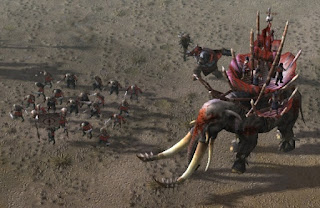
Depending on which fantasy universe
you visit, the elephants might be
even more daunting.

Of course, the lesson here isn’t only that goals need to be broken down in order to be reached. But even more importantly, the goals you coveted at the beginning of your journey may not be right for you once you’ve reached them. In the book Atomic Habits, author James Clear has this to say about the dangers of using goals as your North Star during a project: “Goals create an “either-or” conflict: either you achieve your goal and are successful or you fail and you are a disappointment. You mentally box yourself into a narrow version of happiness. This is misguided. It is unlikely that your actual path through life will match the exact journey you had in mind when you set out. It makes no sense to restrict your satisfaction to one scenario when there are many paths to success.” 


As you may have guessed from its title, the book instead recommends creating habits to guide your life. This will let you find satisfaction in the day-to-day process of working on your project. And with these much more fluid and personal values to guide your path, you’ll have a better chance of finding where you truly want to be. I should mention that this book, Atomic Habits, is probably one of the most important resources a streamer could ever read. It has helped me in countless ways, and I’m sure it can do the same for you. 


➢ FOLLOWING YOUR HEART


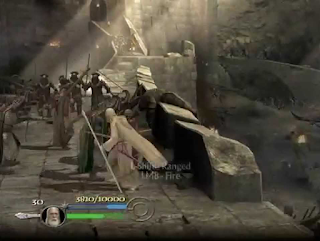
Let's just get through this massive
army of Uruk-hai for starters.
There are a few quotes I love which touch on this subject of de-prioritizing large goals. Several important people across many fields have explored the same sentiment. Legendary animated film director Hayao Miyazaki has a charmingly naturalistic take: “There are so many things we can’t do anything about if we think about generalities. Things won’t go well because there is a huge gap between the generalities and the particulars. If we see generalities from the top of a mountain or from a plane, we feel it’s hopeless, but if we go down, there is a nice road running about fifty meters, we feel this is a nice road, and if the weather is fine and shining, we feel we can go on...” And as Sam says in The Lord of the Rings: The Return of the King when Frodo laments the huge expanse of Mordor between the two hobbits and their goal, “Let’s just make it down the hill for starters.” 


Finally, in his incredible 2005 Stanford
commencement speech, Apple co-founder Steve Jobs gave some insight on how he embraces the futility of forward planning to simply follow his heart: “You can’t connect the dots looking forward; you can only connect them looking backwards. So you have to trust that the dots will somehow connect in your future. You have to trust in something—your gut, destiny, life, karma, whatever. This approach has never let me down, and it has made all the difference in my life.” Incidentally, if you haven’t watched this 15-minute talk before, I highly recommend it. It’s one of the most motivating speeches I’ve ever seen.


So the next time you’re working on your channel and you begin to worry about the massive goal looming over your head, take the advice of many who came before you. Forget about the big picture and focus instead on the now. Eat the elephant one bite at a time, and your streams will eventually get to where they need to go. 


Friday, March 11, 2022

Make Your Streaming Dream Come True


Do you have any streaming dreams? Maybe they involve trying a new idea, or designing something for your graphics layout. Maybe you simply want to become more consistent with your show schedule. Or if you haven’t started yet, you want to begin streaming in the first place. Whatever the ambition, what are you doing right now to make your streaming dream come true? 


➢ VISION WITHOUT REALITY


One of my favorite Seinfeld jokes is brilliant in its simplicity. Jerry and George are in the locker room at their gym, and across the room they spot the baseball player Keith Hernandez. As they nervously wonder whether they should go up and introduce themselves, Jerry tells George about how smart Keith Hernandez is outside of baseball: “You know, he’s a civil war buff.” George looks wistful and says, “I’d love to be a civil war buff.” 


It’s such an absurd thing to say, almost an oxymoron. It’s of course completely in one’s own power whether they become a buff, enthusiast or hobbyist- all they have to do is engage in their hobby. And yet, most prospective streamers think the same way George does. Instead of simply doing the thing they’re interested in, they wish they cared enough to actually try. 


Here’s the thing about following a dream like streaming: Doing it badly isn’t the problem. Having an ugly looking channel isn’t the issue either. Neither is sitting down, only to find you can’t muster up the energy to go live. The biggest problem when following a streaming dream occurs before you even sit down to do the work. Our minds work against us, and convince us that it’s not even worth attempting in the first place. Like two magnets repelling each other, the closer you get to the chair where you might sit down to start creating, the less you want to actually sit down. We’ve all felt it when facing some important project in our lives. Sometimes it’s a random chore, any chore, that conveniently pops into your head when you’re just about to get to work. Or maybe you realize you’re tired and want to go to sleep, or relax by watching netflix. I’ve even felt nausea when trying to sit down on certain days, not because I was sick, but specifically at the moment when I had to face the prospect of actually doing my work. 


But if you can take that one massive step, and sit down to get started, the work will begin to flow. It doesn’t seem to make sense, but trust me. There’s some kind of magic in sitting down and simply doing anything in the direction of your goal. As others who paint, work out, or clean their houses could tell you, merely starting by saying, “I’ll only do a little bit today,” is likely to snowball until suddenly you’ve accomplished more than you ever expected.


➢ CREATIVE AVALANCHE


Fight for what you believe in.

This strategy comes in handy for me all the time. One of the biggest hurdles it helps me with is The Twitch Playbook. Every week, after the newest episode has come out and it’s time for me to start on the next, I think there’s nothing left in the tank. After more than 150 episodes, I can’t imagine what else I could possibly write about. It feels like a completely hopeless endeavor to come up with something new, and even sitting down to write strikes me as a huge waste of time. I’ll come up with any excuse in the world not to do it. I’ll shift my entire calendar to put off the podcast writing time slot until later, and then when the time comes I’ll shift it again. It’s not an exaggeration to say that every single week there’s a point where I think that the previous Twitch Playbook entry might end up being the last. 


But of course, this is all in my head. As soon as I sit down and start putting words on the page- any words, even if they’re terrible and never make it into the entry- those fears begin to go away. Once I stand up 15-30 minutes later, I have only the roughest concept of what the new entry will be, but I’ll already feel confident that I’m on the right track. Because at that point the hardest part, just forcing myself to get started, is over. 


Based on how much I love streaming, and how consistent I am when doing it, you might imagine the same doesn’t happen to me when trying to go live. And you’d be partly right. Most days, I’m thrilled to stream. I look forward to it during the monotony of a long day, or simply can’t wait to pick up where I left off in my current game. But sure enough, bad days will always come. Maybe I’ve been out all day and I’m incredibly tired, or I’m so stressed about something else I need to do that I don’t think I’ll have time to stream. Or maybe, if it’s a creative stream where I make art, I’m nervous I’m going to ruin the piece with whatever I add. But just like with The Twitch Playbook, I force myself to simply sit down and start doing something. I go through the motions of setting up my show. I tell myself, “It’s okay not to do a full-length episode today, and it’s even okay if the show isn’t as good as it normally is. Just get through it. Doing anything is better than nothing.” 


And when I lower my expectations that way, the magic kicks in. As soon as I spend a few minutes on the air, or even setting up the show before going live, I begin to feel the energy come back. My other problems melt away, and I can simply exist in the present. I can enjoy each part of the task for what it is, without any expectations, fears or regrets. 


Whatever your streaming dreams are, whether you want to add new game styles to your offering, create visual overhauls, or even just get started on Twitch, think about the moment before doing your work as the climb of a roller coaster. The car is slowly pulling itself uphill, the fears begin to rise within you, and oftentimes you can’t see where the track beyond the hill’s crest is going to lead. But once you get yourself over that ledge, the work begins picking up speed. And before you know it, the anxiety about the climb is forgotten and fun is the only thing you’re thinking about. So sit down and start working, even if you tell yourself it’s only going to be for a minute or two. Your streaming dreams might start coming together quicker than you think.