Friday, March 18, 2022

When Streaming, Look at the Small Picture


If you’re just starting on your streaming journey, it’s likely you have some kind of ultimate goal for your channel. And since most channels don’t begin exactly how we envision them, that goal might be pretty far off. You’ll work toward those ambitions over time, with plenty of experimentation and difficult lessons along the way. Similarly, even if you’re an experienced streamer and you’ve already met your original stream goals, you’ve likely since created new objectives to chase after. It’s good to stay fresh, and continually try to reach new heights. But as I’ve explored in entries before, goals come in many shapes and sizes. And some goals can actually hurt your channel more than they help. So what’s the best way to approach a goal if you want to stay motivated throughout your journey? 


There’s an old proverb: ‘How do you eat an elephant? One bite at a time.’ In other words, the prospect of eating an elephant is so unimaginably daunting that the only way to get it done is to focus on the next bite. In streaming, it’s best to think the same way. It’s fine to have a large, long-term goal for your channel, but that’s like eating an elephant- it’s impossible to envision an actual day-to-day strategy that will lead you where you want to go when you think in terms that big. Instead, break your large ambitions down into little ‘bites,’ which will help you not only to stay on track with your tasks, but to feel a more frequent sense of accomplishment. 


➢ TRUST IN THE PROCESS


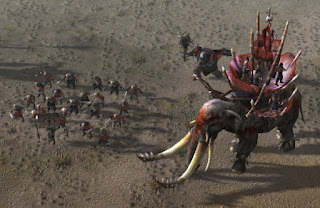
Depending on which fantasy universe
you visit, the elephants might be
even more daunting.

Of course, the lesson here isn’t only that goals need to be broken down in order to be reached. But even more importantly, the goals you coveted at the beginning of your journey may not be right for you once you’ve reached them. In the book Atomic Habits, author James Clear has this to say about the dangers of using goals as your North Star during a project: “Goals create an “either-or” conflict: either you achieve your goal and are successful or you fail and you are a disappointment. You mentally box yourself into a narrow version of happiness. This is misguided. It is unlikely that your actual path through life will match the exact journey you had in mind when you set out. It makes no sense to restrict your satisfaction to one scenario when there are many paths to success.” 

As you may have guessed from its title, the book instead recommends creating habits to guide your life. This will let you find satisfaction in the day-to-day process of working on your project. And with these much more fluid and personal values to guide your path, you’ll have a better chance of finding where you truly want to be. I should mention that this book, Atomic Habits, is probably one of the most important resources a streamer could ever read. It has helped me in countless ways, and I’m sure it can do the same for you. 


➢ FOLLOWING YOUR HEART


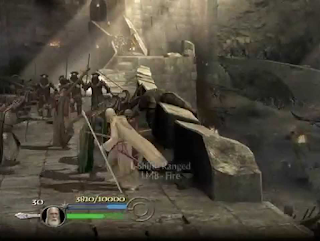
Let's just get through this massive
army of Uruk-hai for starters.
There are a few quotes I love which touch on this subject of de-prioritizing large goals. Several important people across many fields have explored the same sentiment. Legendary animated film director Hayao Miyazaki has a charmingly naturalistic take: “There are so many things we can’t do anything about if we think about generalities. Things won’t go well because there is a huge gap between the generalities and the particulars. If we see generalities from the top of a mountain or from a plane, we feel it’s hopeless, but if we go down, there is a nice road running about fifty meters, we feel this is a nice road, and if the weather is fine and shining, we feel we can go on...” And as Sam says in The Lord of the Rings: The Return of the King when Frodo laments the huge expanse of Mordor between the two hobbits and their goal, “Let’s just make it down the hill for starters.” 


Finally, in his incredible 2005 Stanford
commencement speech, Apple co-founder Steve Jobs gave some insight on how he embraces the futility of forward planning to simply follow his heart: “You can’t connect the dots looking forward; you can only connect them looking backwards. So you have to trust that the dots will somehow connect in your future. You have to trust in something—your gut, destiny, life, karma, whatever. This approach has never let me down, and it has made all the difference in my life.” Incidentally, if you haven’t watched this 15-minute talk before, I highly recommend it. It’s one of the most motivating speeches I’ve ever seen.


So the next time you’re working on your channel and you begin to worry about the massive goal looming over your head, take the advice of many who came before you. Forget about the big picture and focus instead on the now. Eat the elephant one bite at a time, and your streams will eventually get to where they need to go. 


Friday, March 11, 2022

Make Your Streaming Dream Come True


Do you have any streaming dreams? Maybe they involve trying a new idea, or designing something for your graphics layout. Maybe you simply want to become more consistent with your show schedule. Or if you haven’t started yet, you want to begin streaming in the first place. Whatever the ambition, what are you doing right now to make your streaming dream come true? 


➢ VISION WITHOUT REALITY


One of my favorite Seinfeld jokes is brilliant in its simplicity. Jerry and George are in the locker room at their gym, and across the room they spot the baseball player Keith Hernandez. As they nervously wonder whether they should go up and introduce themselves, Jerry tells George about how smart Keith Hernandez is outside of baseball: “You know, he’s a civil war buff.” George looks wistful and says, “I’d love to be a civil war buff.” 


It’s such an absurd thing to say, almost an oxymoron. It’s of course completely in one’s own power whether they become a buff, enthusiast or hobbyist- all they have to do is engage in their hobby. And yet, most prospective streamers think the same way George does. Instead of simply doing the thing they’re interested in, they wish they cared enough to actually try. 


Here’s the thing about following a dream like streaming: Doing it badly isn’t the problem. Having an ugly looking channel isn’t the issue either. Neither is sitting down, only to find you can’t muster up the energy to go live. The biggest problem when following a streaming dream occurs before you even sit down to do the work. Our minds work against us, and convince us that it’s not even worth attempting in the first place. Like two magnets repelling each other, the closer you get to the chair where you might sit down to start creating, the less you want to actually sit down. We’ve all felt it when facing some important project in our lives. Sometimes it’s a random chore, any chore, that conveniently pops into your head when you’re just about to get to work. Or maybe you realize you’re tired and want to go to sleep, or relax by watching netflix. I’ve even felt nausea when trying to sit down on certain days, not because I was sick, but specifically at the moment when I had to face the prospect of actually doing my work. 


But if you can take that one massive step, and sit down to get started, the work will begin to flow. It doesn’t seem to make sense, but trust me. There’s some kind of magic in sitting down and simply doing anything in the direction of your goal. As others who paint, work out, or clean their houses could tell you, merely starting by saying, “I’ll only do a little bit today,” is likely to snowball until suddenly you’ve accomplished more than you ever expected.


➢ CREATIVE AVALANCHE


Fight for what you believe in.

This strategy comes in handy for me all the time. One of the biggest hurdles it helps me with is The Twitch Playbook. Every week, after the newest episode has come out and it’s time for me to start on the next, I think there’s nothing left in the tank. After more than 150 episodes, I can’t imagine what else I could possibly write about. It feels like a completely hopeless endeavor to come up with something new, and even sitting down to write strikes me as a huge waste of time. I’ll come up with any excuse in the world not to do it. I’ll shift my entire calendar to put off the podcast writing time slot until later, and then when the time comes I’ll shift it again. It’s not an exaggeration to say that every single week there’s a point where I think that the previous Twitch Playbook entry might end up being the last. 


But of course, this is all in my head. As soon as I sit down and start putting words on the page- any words, even if they’re terrible and never make it into the entry- those fears begin to go away. Once I stand up 15-30 minutes later, I have only the roughest concept of what the new entry will be, but I’ll already feel confident that I’m on the right track. Because at that point the hardest part, just forcing myself to get started, is over. 


Based on how much I love streaming, and how consistent I am when doing it, you might imagine the same doesn’t happen to me when trying to go live. And you’d be partly right. Most days, I’m thrilled to stream. I look forward to it during the monotony of a long day, or simply can’t wait to pick up where I left off in my current game. But sure enough, bad days will always come. Maybe I’ve been out all day and I’m incredibly tired, or I’m so stressed about something else I need to do that I don’t think I’ll have time to stream. Or maybe, if it’s a creative stream where I make art, I’m nervous I’m going to ruin the piece with whatever I add. But just like with The Twitch Playbook, I force myself to simply sit down and start doing something. I go through the motions of setting up my show. I tell myself, “It’s okay not to do a full-length episode today, and it’s even okay if the show isn’t as good as it normally is. Just get through it. Doing anything is better than nothing.” 


And when I lower my expectations that way, the magic kicks in. As soon as I spend a few minutes on the air, or even setting up the show before going live, I begin to feel the energy come back. My other problems melt away, and I can simply exist in the present. I can enjoy each part of the task for what it is, without any expectations, fears or regrets. 


Whatever your streaming dreams are, whether you want to add new game styles to your offering, create visual overhauls, or even just get started on Twitch, think about the moment before doing your work as the climb of a roller coaster. The car is slowly pulling itself uphill, the fears begin to rise within you, and oftentimes you can’t see where the track beyond the hill’s crest is going to lead. But once you get yourself over that ledge, the work begins picking up speed. And before you know it, the anxiety about the climb is forgotten and fun is the only thing you’re thinking about. So sit down and start working, even if you tell yourself it’s only going to be for a minute or two. Your streaming dreams might start coming together quicker than you think. 


Saturday, March 5, 2022

Streaming Habits vs Goals


In 2007, an artist named Mike Winkelmann set out on a creative quest that few before him, but many since, have attempted: he wanted to create a new piece of art every day for a whole year. However, there was one key difference between him and most others who try this: he pulled it off. And not only did he actually produce 365 distinct images in as many days, but after it was over he decided to keep his streak going. Fourteen years of nonstop daily creations later, Winkelmann, known as Beeple in the art world, sold a piece of his work from this ‘Everydays’ project for $69 million. 


What does it take to have such commitment to a personal project? And as I’m sure many more of you are wondering, how did he work up to a place where he could become so fabulously successful from his work? Are the answers to these two questions somehow inextricably linked? And if so, how can we harness the power of our habits to attain such acclaim? In this entry we’ll explore how habits and goals factored into Beeple’s success, and whether one of these two concepts might serve you more than the other in your own streaming journey. 


➢ EVERYDAYS


By creating a finished image every
day, Beeple grew immensely as
an artist.

There are some clear connections to be drawn between the commitment required of a project like Beeple’s and the lifestyle of a streamer. He’s creating content from start to finish by working a few hours each day, the time it takes most of us to do a broadcast. He works on a computer to make his art, which exposes him to several of the same wildcard factors and glitches we run into when trying to go live: power outages, software bugs, broken parts, and anything else the tech gods want to throw at us. He, like us, has struggled to produce his work amidst other real-world personal and professional responsibilities. I’m sure he isn’t hurting for cash nowadays, but for over a decade he was still hustling and doing client work while also creating his personal ‘Everydays’ project on the side. And finally, he’s forcing himself to post something online, which exposes him to public scrutiny- the same thing we do as streamers every time we broadcast. Just like with our shows, whether he’s proud of his output that day or not, it’s out there for all to see. And if he’s not proud, maybe that’ll motivate him to do better the next day. Beeple essentially went through every significant trial we could face, and stuck with it no matter what challenge presented itself, for fourteen years straight. So when we miss stream days, what’s our excuse? 


The first thing everyone wants to know is, how does Beeple stay motivated? Does he simply exist on some plane of work ethic high above all the rest of us? He’d be the first to tell you that’s not the case. For him, it’s a combination of a few factors: accepting imperfection, staying flexible, and allowing the streak to become its own motivation. 


Speaking with The Atlantic in 2011, a decade before he’d make his record-breaking sale, he had this to say about the process of creating content, elegant as always: “Art is like taking a dump, it's not always fun or convenient but it's something you gotta do everyday and you shouldn't get too hung up if the product looks like pile of crap. Yer not gonna make a masterpiece everyday or even 95% of the time, but it's a numbers game and you've got to get rid of all those crappy ideas before you can get to the good ones. Just showing up is 90% of the battle.” 


When Vice asked him how long it takes to create a piece of art, he demonstrated just how committed he is to the concept of creating every day: “From five minutes, if that's all the time I have—like the day my first daughter was born—to a couple of hours.” You may recognize this concept from the Twitch Playbook entry Just Keep Streaming, in which I said, “You should be flexible about WHEN and HOW you stream, but never about WHETHER you stream.” I truly think that the notion of a ‘fixed stream length’ is the number one killer of motivation. Because if you aren’t flexible enough to simply pump out something shorter or lower quality on a difficult day, your habit is unlikely to last when you’re put under large amounts of pressure. 


➢ PLANNING FOR SUCCESS


So Beeple clearly carved out a very good thing for himself. He created a rock-solid habit, and with lots of dedication, he was able to stick to it. But what about his massive success later in his career? Here we’ll focus specifically on his Everydays project, not his other professional work, because creating artwork after hours each day is the closest approximation to streaming among Beeple’s habits. And of course, the Everydays project is what made him $69 million in a single sale. So how did Beeple set himself up to make such a sale? And how did he keep himself going for fourteen years until he struck gold? 


The 5-minute image Beeple made the day
his daughter was born. He didn't stop his
streak, but he didn't let the streak 
interfere with his personal life either. 

The answer is that he didn’t plan for success. When speaking a few years ago about whether he ever imagined he’d reach a ten year streak, he replied, “No. I was focused on trying to get better at drawing. I wasn't thinking about an end date. After the momentum of the 2nd year, I realized I could keep doing this for a while. Once you get the momentum, that's what carries you forward.” He began the project as a means of improving his art, and that seems to be all he’s ever been interested in with the project: “I feel like I'm still so far from where I want to be. I look at artists in a variety of mediums and think, "Why would I stop now?" Part of it is not looking at it too far down the line, and focusing on short term goals.” 


Many Twitch streamers begin their channels in the opposite way from Beeple. They imagine the ends (fame and fortune) before even attempting to engage in the means (actually doing a broadcast). This is, in my opinion, the absolute wrong way to pick up a habit. It’s very unlikely someone will stick with a project for the long term, if they don’t genuinely get into it for the love of the act itself. The most interesting part about Beeple’s story is that his coming into fabulous wealth is almost an incidental footnote. The project was the real reward. He would have continued doing it whether or not it made him money, whether or not he became famous, and whether or not anyone even looked at his images at all. How do we know that? Because he proved that he would. Every day, for over 5,000 days. And as Beeple put it when asked by GQ where he’ll go after making his sale, “Well, I’m not going to listen to all the critics. I only do what I want to do and if that resonates with people then so be it.” Can you let go of your long term goals, and allow your Twitch passion to take you wherever it might lead? If you do, whether you reach your original goals or not, you’ll always enjoy the ride. And like Beeple, you might just find that you end up somewhere even better than you could have imagined. 


Friday, February 25, 2022

Streaming to More Than Just Twitch


In a few of the more autobiographical entries, I’ve mentioned how I have worked on many channels before my current one. And in the past ten or so years, those have spanned across several different livestreaming and non-live services. Then in 2016 I was hired by a company to produce live content on Facebook when the social media giant’s broadcasting tools were only just beginning to roll out. And when I eventually started my own Twitch channel, every Twitch broadcast was going simultaneously to Facebook and YouTube, before becoming exclusive to Twitch. So despite the fact that I’ve only ever spoken about livestreaming on Twitch in this podcast so far, I’m certainly no stranger to the various other streaming ecosystems. So in this entry, we’ll jump into a subject I’ve never covered in the Twitch Playbook before: streaming to more than just Twitch. 


➢ THE DOTTED LINE


You can make great content whether or
not you sign. But you always have a choice.

Most Twitch streamers aim for the platform-exclusive path. This means they try to grow fast enough on the Twitch platform to sign an Affiliate contract, and eventually move up to the highest rung on the Twitch ladder, Partner. These contracts bring great benefits. You’ll make money off your streams from ad revenue, monthly subscriptions and optional tip-jar style donations from viewers. Viewers get various goodies from your channel as well, like loyalty badges, fun emotes to use in your chat, and any other perks you choose to include for your most faithful supporters. And on top of that there’s always the invisible benefit of focus: I’ve often mentioned that being
really good in one field is typically preferable to being mediocre in many, and streaming is no different. Sticking to Twitch can help you grow very fast, if you learn how to play the game properly. 


But signing a contract with Twitch also limits you in a few key ways. First, by becoming an Affiliate or Partner you’re signing away your rights to simultaneously stream on any other platforms. Violating this is an easy way to have your privileges revoked. You also can’t post your stream anywhere else for at least 24 hours- it has to be exclusive to Twitch in that span. Now, these rules are understandable. Considering Twitch will be the platform paying you, they want to be the place viewers go to see your shows when they’re new. But all these thoughts are just theoretical, right? You hardly have a choice in the matter. How else are you going to monetize if you’re not getting paid by the Twitch platform for your shows? If a Twitch streamer is serious, they have to sign an Affiliate contract. Right?


➢ MULTI (REVENUE) STREAMING


Depending on what kind of content you make, or the direction you want your brand to grow, you may not want to be exclusive to just the Twitch platform. We’re going to assume that Twitch is always one of the platforms you’re streaming to (this is The Twitch Playbook, after all), but that you just want to add others like YouTube or Facebook to the mix. And if that is the case, it’s important to know that you do have monetization options- Twitch’s contract isn’t the only way. In fact, if you really think about it, many of the revenue streams that Twitch Affiliates create are actually attainable without signing a contract at all. Let’s explore a few: 


  • Merch Stores - This is a great option for those who have a strong brand following. There are plenty of good ‘print on demand’ services out there which can provide you high-quality products to sell without charging any up-front costs. Just make sure to watch the profit margins, because they typically take a high percentage for printing, packing and shipping every item. Using various software integrations, you can even show exciting graphics on your streams whenever someone makes a purchase from your store.

  • Donations - Viewers can donate to you directly through various third-party services, in almost the exact same way they would do through Twitch’s built-in Cheer feature. There are great software integrations for donations as well, which can show graphics and messages on your stream whenever someone sends you money. Depending on the service you use, they may even take a smaller cut from what you make than Twitch does.

  • Subscriptions - The subscription is the bread and butter of any streamer’s monetization strategy. But there are plenty of ways to let viewers subscribe to your content for a monthly fee outside of Twitch. Patreon is a great one- you gain the ability to create more tiers for higher-paying subscribers, and the amount of extra content you offer is up to you. I know people who make a great living through Patreon as a sole monetary backbone for their video offerings. 


Your livestreaming empire might reach
beyond Twitch.

And of course, the best part about a setup like this is that if you’re multistreaming to Twitch, YouTube, Facebook, Twitter, LinkedIn, and wherever else you’re trying to build a fanbase, anyone watching any of those streams can buy merch, donate or subscribe. This removes the exclusivity ceiling, though it does also slightly inconvenience Twitch viewers, who are typically used to Cheering and Subscribing directly through the built-in ecosystem without visiting other websites. It’s a give and take, and it won’t be right for everyone, but if your viewers are enthusiastic about supporting you, it shouldn’t be too much of an issue. 


So if you’re interested in adding other platforms to the livestreaming side of your brand in addition to Twitch, hopefully this shows that there are plenty of possibilities. I’ve done it in the past, and I’ve only ever had good experiences doing so. There are lots of people out there on other services who could be interested to watch your shows, comment along, and help to support your content. But there’s no right answer, and you certainly shouldn’t rush to a decision. I’m not saying you should cancel your Affiliate contract and start multicasting today. But as I often do in The Twitch Playbook, I’d like to encourage you to think outside the typical Twitch trajectory, and open your mind to new ideas. Consider whether streaming to more than just Twitch is right for you. It’s possible that there’s a whole world of opportunity waiting. 


Saturday, February 19, 2022

How Does Your Internet Work?


The internet is something we Twitch streamers use every time we broadcast. More than that, it’s something that all of us in the first world use for a large portion of our daily routines. Yet many of us don’t know much about all the mysterious speeds and other values associated with our internet. We don’t consider how those numbers affect our connectivity, nor how our own actions impact them. In the past entry Getting Your Stream Output Settings Just Right, I helped you to understand some of the most critical internet-related terms for a streamer, and in the follow-up entry Understanding Network Settings for Streaming, I went into more specific ideas that a streamer might need to create their shows effectively. This time, we’ll take a step back to explore some more general ideas about the internet which often cause confusion, and a few ways your household’s normal internet usage might be affecting your streams in an unexpected way. In short, we’re going to take a look at how your internet works- at least as far as we might need to know as streamers. 


➢ WHICH DIRECTION? 


Apparently, the undersea internet cables
are vulnerable to sharks and other dangers.

The first thing to understand when talking about the internet is how information gets transmitted. There are two directions that data can travel between your machine and the internet: up or down. And in order to grasp how these two directions work, you need only to think about the internet as being constantly above you.
(In a metaphorical sense, of course. In reality, the internet really lives in cables at the bottom of the ocean, but let’s forget that for the purposes of this entry.) Remember in the aforementioned earlier two entries where I talked about download and upload speeds? Those are the two main stats that always show up when you test your internet connection. And they’re the two values we’ll be using for this entry. If you think about the internet as always being above you, then it’s very easy to understand the meanings of these two transfer directions. Anything that you want to receive from the internet would need to travel downwards, meaning you’d require download speeds to do it. This would include visiting websites, watching Netflix, and many of the other things we do in our daily lives. Conversely, anything you want to send to the internet would need to travel upwards, meaning you’d need to use upload speeds. This includes sending files to the cloud, posting to Instagram, and of course, streaming. 


As I’ve mentioned in previous entries, streaming requires only upload speeds to achieve. Despite what many people believe, there is no downloading aspect used for broadcasting a livestream. At least not from your side of things. 


Make sense so far? Let’s break it down and take stock for a second with a quick exercise. Below are two hypothetical scenarios in which one of your two internet speeds are completely gone, and we’ll explore what you will and won’t be capable of doing in those situations. I’m going to use Mbps (or megabits per second) as the metric for this, which I’ve explained in detail in previous entries. For these purposes, I think you’ll get the idea either way. 


  • 0 Mbps Down / 10 Mbps Up: In this situation you’d be able to stream perfectly. However, you would not be able to watch your own stream, because that requires you to pull the stream data down from the internet to do it.

  • 10 Mbps Down / 0 Mbps Up: You would not be able to livestream at all. There is no way for your device to send data to the internet. You could however, watch Netflix, visit websites, or even watch other peoples’ livestreams, without issue. 


Okay, that’s not too complicated right? Now let’s get into a few grayer areas. 


➢ GOING BOTH WAYS


Now that we’ve defined how the internet works for streaming in its absolute simplest form, let’s go a little deeper. There are situations in which you’ll need both speeds for your streams. As I mentioned, only upload speed is needed for your stream to be broadcast to the internet. That isn’t going to change. But depending on what kind of content you make, streaming may involve a more complex use of your network. 


If a 360 noscope happens in a match, 
but there's no internet to upload it, 
did it really happen? 

For example, if you play multiplayer games, those use both internet speeds at all times. In a Team Slayer match in Halo, you’re constantly downloading small packets of information about where the other players are, who they’re shooting at, what the score is, and all sorts of things, multiple times per second. But in order to affect the game yourself, you’re also uploading data of your own at just as constant a rate. This is on top of the data you’re using to upload your actual stream to Twitch. 


You may need to use download speeds on stream for other purposes as well, even if that speed has nothing to do with the actual process of broadcasting. Maybe you switch what you’re playing mid-stream, and your game or console needs to update. Or maybe you want to browse websites or watch videos on stream with your viewers. And of course, most of us also interact with chat during our shows. All of these things use varying levels of download speeds. They’re not related to the literal process of streaming, but they’re things you may do during your streams. 


If you’re streaming an offline singleplayer game however, or oil painting, or broadcasting your hikes, without any other bells and whistles, there is technically no download speed needed at all. 


So let’s go back to our hypothetical two scenarios and just take stock of all this information for a second: 


  • 0 Mbps Down / 10 Mbps Up - Your stream is able to go live. However, you’re not able to play multiplayer games, read chat, or browse webpages.

  • 10 Mbps Down / 0 Mbps Up - You are not able to livestream at all. You’re still not able to play multiplayer games. But you can watch other streams, read chat, download files and updates, or browse webpages.


➢ KEEPING THE PATHWAYS CLEAR


Now, I hope you don’t run into any situations where it’s a complete 50/50, with either your download or upload speed being completely gone. This Thanos-style network decimation is not a very likely scenario, but hopefully by taking the example to its extreme you’re able to see more clearly what your various internet speeds are responsible for. And the next time you have connectivity issues, you might better understand what’s causing them. Like I’ve mentioned in previous entries, there’s a limited pool of internet speeds within every household. If your upload speeds are 10 Mbps and you stream using an output of that full 10 Mbps, you’re not leaving any room for anything else- you may notice your multiplayer game lagging, or your stream dropping frames. However, if someone on your network is downloading a huge file, it can affect the speed of your Xbox updates but will not affect your broadcast. Hopefully, by better understanding how your internet works, you’ll be equipped to face many more stream problems with a cool head. 


Saturday, February 12, 2022

The Problem With Buying Before Streaming


Throughout The Twitch Playbook, I’ve often advised against buying things for your channel. I’ve come at it from many different angles, and have perhaps even been pretty convincing in a few entries. But for some of you, especially those who are just now looking to start on their Twitch adventures, this may still seem like a counterintuitive concept. How can we stream without any streaming equipment? In fact, many feel that buying something to start us on our path is the perfect motivator to keep us moving toward our goals. So let’s explore the trajectory of the average hopeful who wants to pick up a habit, whether it be streaming or anything else. 


➢ THE STORY OF PREEMPTIVE PURCHASING


Let’s say I want to start doing [insert habit here.] First I’ll do some research and buy everything I need. After all, making purchases feels secure. It feels like I’m committing to something. Of course, what could represent commitment more than putting down my hard-earned money? It means there’s no turning back. I’m in it for the long haul. In fact, by making the purchase, I’ve sort of already taken the first step towards my goal. I’ve dipped my toe into the proverbial pool. I mean, it was a pretty large purchase. Maybe I’m actually in the pool already, just by making such a huge commitment! In fact, maybe I miscalculated earlier. Now that I’m thinking about it again, I really did the hardest part by doing the research and buying that stuff, so I might as well have reached my goals already. This is great! I feel really good about myself. Pursuing my passion will be a cinch from here on out! 


But then when it comes time to actually go use that thing I bought, something strange happens. I put it off. “Eh,” I tell myself, “I’m tired today. I’ve already done so much by buying this thing, and then setting it up. I don’t want to overdo it.” Tomorrow comes, but I find I’m just so busy that day that there’s no way I can squeeze in time to put it to use. But of course, having bought the equipment, I already know I’m committed to it. So what’s the problem with going another day without using it? I can use it any time now. After all, I own it!


So this goes on and on. Day after day. Maybe I parade the thing out every once in a while on a lark, but I never really get into a groove using it. And after enough time, I find that it’s been sitting in a corner, collecting dust for years. 


Kratos didn't buy anything and...
Okay, not sure where I'm going with this one. 

This is a story as old as the world. Three thousand years ago, I’m sure some Greek was making the same promises to himself about the new discus he bought to practice for the pentathlon. And one day, archeologists will dig up the remains of a blank stack of parchment, that some poor serf under pharaoh Ramses spent his life savings on. He would have written the Great Egyptian Novel, if only he could bring himself to put down a single hieroglyph. All around us, our friends, relatives and neighbors are doing the same thing every day. They buy expensive cameras to become photographers, home exercise equipment to lose weight, guitars and swathes of accessories for it before ever learning a chord, or a thousand other things. You name a hobby, and sure enough, there’s a major purchase waiting to be made for it. But what does all this have in common? You can almost always start practicing that hobby for free, or at most with a single, much more modest item. If you only focused on what was really important. 


➢ FALSE READINGS


There’s a concept I’ve spoken about before, where telling others about your goals causes you to be less likely to actually follow through with them. As Inc. Magazine described the results of a study performed at a German university, “The researchers concluded that telling people what you want to achieve creates a premature sense of completeness. While you feel a sense of pride in letting people know what you intend to do, that pride doesn't motivate you and can in fact hurt you later on. When you write down or think about your intentions, there's a gap between where you are and where you want to be. The compelling need to close this gap helps you to act on your intentions. But when you let others know about it, the gap closes because you (artificially) feel the same way you should after completing your intentions.” This is why, in entries like Build Your Twitch Channel Like You’re a Secret Agent, I’ve suggested that you not tell anyone about your big project until it’s been underway and going smoothly for a long time. You don’t want to sabotage your motivation before you’ve even started. And as you may have guessed, I believe this exact same phenomenon occurs when purchasing equipment in preparation of starting a new hobby as well. Making those big purchases closes the ‘gap’ that Inc. Magazine described, between where you are and where you want to be. The act of buying gives you a false sense of accomplishment, which can often be enough to dampen your creative spark. 


So if you’re dreaming of becoming a photographer, just take pictures on your phone for a while. If you’re trying to get healthy, work out at home. And if you want to be a Twitch streamer, go live with whatever you already have handy. There are plenty of entries I’ve written already, such as Start Your Twitch Channel With No Money, which can help you do this without any prior skill or resources. Then, when you’ve been streaming for weeks or months without ever missing a day, you’ll be secure enough in your habit to slowly begin adding things to your arsenal without sapping your motivation. Too often, people confuse buying with doing. And while it may seem like you’re making progress by purchasing things prematurely in your streaming adventure, you may in fact be doing just the opposite. So don’t lose sight of your goal. Stream sooner, and leave the purchases for later. 


Friday, February 4, 2022

Survive the Streaming Doldrums


Whether you’re just beginning to stream, or you’ve been on Twitch for a while, there are a few things you’ll always encounter if you go live often enough. You’ll run into every technical hurdle in the book, you’ll make every mistake possible, and you’ll put in lots of work to improve. But as you keep spending time and effort, you’ll notice that your project is actually growing. Among the mistakes and tech issues, a clear trajectory is forming for your channel. Yes, if you keep going at this rate, you’ll be Affiliate, Partner, or on the front page in no time! This is amazing! 


And then, all of a sudden, it happens. The growth dries up. You go live, day after day, and none of that magic is there any longer. There’s almost no one to talk to, or even to watch your streams, and you begin to wonder why you’re even doing it anymore. Unfortunately, when you go live often enough, these moments are just as inevitable as growth. For one reason or another, you’ve found yourself in the streaming doldrums. 


➢ EQUATORIAL CALM 


When sails are your only propulsion
method, you live or die by the wind.

Near the equator, there’s a section of the ocean that’s become known as ‘
the doldrums.’ In this belt of sea, trade winds meet each other, and for some meteorological reason above my pay grade, this often results in no winds at all for seafaring ships. Crews dreaded these deadly calm waters, where they could be stranded for weeks on end. Food and water would run low, scurvy could set in, and psychological effects like cabin fever could take their toll. If you were a mariner on a sailing ship in the time before motors and engines, you did not want to be anywhere near the doldrums. 


In streaming, the doldrums can come in many forms, for no visible reason at all. Sometimes your viewers dry up, and nobody is watching your shows. Other times it can be chat, where you can’t get anybody talking. Or maybe it’s you, where you simply can’t perform to your usual standard in competitive matches. Whatever the circumstance, these doldrums can cause a similar effect for your streaming life that sailors would experience on the open sea. 


When you’re caught in this mode of low performance, your supplies begin to run low. But for a Twitch channel, instead of food and water, your greatest supply is motivation. We often don’t realize how dependent we are on the attention and approval of others. For many of us, we not only love to get a good response from our viewers, but sometimes change the kind of content we produce to more effectively cater to our viewers’ interests. But what happens when viewership is dropping, no matter what you do to cater to their whims? This can create an incredible dejection in a streamer, because now you’re not only creating content outside what you’d normally do, but you’re creating it for those who don’t even seem to care. It’s a ‘worst of both worlds’ scenario which can often become a crucial turning point for a streamer’s career. Many in this situation decide that they’ve had enough. If the audience isn’t going to appreciate what the streamer is doing for them, why bother? They take a break, focus on something else for a while, or throw in the towel completely and shut down their channels. But if you’re prepared, there is a way to combat these streaming doldrums. Not to prevent them (because they’ll happen once in a while no matter what you do), but to survive with your channel and enthusiasm intact. 


➢ SELF-PROPULSION


So you’re caught in a spot with no wind. What’s the best way to get out of it? Use a motor. 17th century pirates didn’t have this option, but fortunately, you do. Think of your Twitch channel as a ship. Viewership, chat engagement, monthly subscriptions, day-to-day performance, and everything else outside of your control is the wind. The wind comes and goes, it pushes you in different directions, and sometimes it goes away completely. When you let the whims of your viewership push you around, change your content, and in some cases dictate whether your channel lives or dies, you’re only asking for disaster. To become a stronger Twitch streamer, it’s necessary to have self-propulsion as well, which isn’t beholden to the fickle and ever-changing winds. On a ship, that would be an engine, and on your Twitch channel, it’s a creative vision. 


Use your creative vision as a means
of propelling your channel forward.

If you have a creative vision at the heart of what you’re doing on Twitch, you’ll be able to see your goals more clearly. It’s still possible to change what you’re doing and cater to the ‘shifting winds’ of your viewers, but you will never stray so far away from your concept that you’ll find yourself lost. Plus, because something you truly care about is at the heart of your channel, you’ll enjoy what you’re doing more. And as I often say in these entries, liking what you do on your channel each day is the best way to weather anything you encounter.


Many of us begin with a strong creative vision but lose our way, and others need to find their visions as they go. Whichever category you fall into, try taking some time to navigate yourself back to the things you really care about. Because if you’re propelled by your passions, you’ll be prepared to face the streaming doldrums without fear.