Saturday, February 19, 2022

How Does Your Internet Work?


The internet is something we Twitch streamers use every time we broadcast. More than that, it’s something that all of us in the first world use for a large portion of our daily routines. Yet many of us don’t know much about all the mysterious speeds and other values associated with our internet. We don’t consider how those numbers affect our connectivity, nor how our own actions impact them. In the past entry Getting Your Stream Output Settings Just Right, I helped you to understand some of the most critical internet-related terms for a streamer, and in the follow-up entry Understanding Network Settings for Streaming, I went into more specific ideas that a streamer might need to create their shows effectively. This time, we’ll take a step back to explore some more general ideas about the internet which often cause confusion, and a few ways your household’s normal internet usage might be affecting your streams in an unexpected way. In short, we’re going to take a look at how your internet works- at least as far as we might need to know as streamers. 


➢ WHICH DIRECTION? 


Apparently, the undersea internet cables
are vulnerable to sharks and other dangers.

The first thing to understand when talking about the internet is how information gets transmitted. There are two directions that data can travel between your machine and the internet: up or down. And in order to grasp how these two directions work, you need only to think about the internet as being constantly above you.
(In a metaphorical sense, of course. In reality, the internet really lives in cables at the bottom of the ocean, but let’s forget that for the purposes of this entry.) Remember in the aforementioned earlier two entries where I talked about download and upload speeds? Those are the two main stats that always show up when you test your internet connection. And they’re the two values we’ll be using for this entry. If you think about the internet as always being above you, then it’s very easy to understand the meanings of these two transfer directions. Anything that you want to receive from the internet would need to travel downwards, meaning you’d require download speeds to do it. This would include visiting websites, watching Netflix, and many of the other things we do in our daily lives. Conversely, anything you want to send to the internet would need to travel upwards, meaning you’d need to use upload speeds. This includes sending files to the cloud, posting to Instagram, and of course, streaming. 


As I’ve mentioned in previous entries, streaming requires only upload speeds to achieve. Despite what many people believe, there is no downloading aspect used for broadcasting a livestream. At least not from your side of things. 


Make sense so far? Let’s break it down and take stock for a second with a quick exercise. Below are two hypothetical scenarios in which one of your two internet speeds are completely gone, and we’ll explore what you will and won’t be capable of doing in those situations. I’m going to use Mbps (or megabits per second) as the metric for this, which I’ve explained in detail in previous entries. For these purposes, I think you’ll get the idea either way. 


  • 0 Mbps Down / 10 Mbps Up: In this situation you’d be able to stream perfectly. However, you would not be able to watch your own stream, because that requires you to pull the stream data down from the internet to do it.

  • 10 Mbps Down / 0 Mbps Up: You would not be able to livestream at all. There is no way for your device to send data to the internet. You could however, watch Netflix, visit websites, or even watch other peoples’ livestreams, without issue. 


Okay, that’s not too complicated right? Now let’s get into a few grayer areas. 


GOING BOTH WAYS


Now that we’ve defined how the internet works for streaming in its absolute simplest form, let’s go a little deeper. There are situations in which you’ll need both speeds for your streams. As I mentioned, only upload speed is needed for your stream to be broadcast to the internet. That isn’t going to change. But depending on what kind of content you make, streaming may involve a more complex use of your network. 


If a 360 noscope happens in a match, 
but there's no internet to upload it, 
did it really happen? 

For example, if you play multiplayer games, those use both internet speeds at all times. In a Team Slayer match in Halo, you’re constantly downloading small packets of information about where the other players are, who they’re shooting at, what the score is, and all sorts of things, multiple times per second. But in order to affect the game yourself, you’re also uploading data of your own at just as constant a rate. This is on top of the data you’re using to upload your actual stream to Twitch. 


You may need to use download speeds on stream for other purposes as well, even if that speed has nothing to do with the actual process of broadcasting. Maybe you switch what you’re playing mid-stream, and your game or console needs to update. Or maybe you want to browse websites or watch videos on stream with your viewers. And of course, most of us also interact with chat during our shows. All of these things use varying levels of download speeds. They’re not related to the literal process of streaming, but they’re things you may do during your streams. 


If you’re streaming an offline singleplayer game however, or oil painting, or broadcasting your hikes, without any other bells and whistles, there is technically no download speed needed at all. 


So let’s go back to our hypothetical two scenarios and just take stock of all this information for a second: 


  • 0 Mbps Down / 10 Mbps Up - Your stream is able to go live. However, you’re not able to play multiplayer games, read chat, or browse webpages.

  • 10 Mbps Down / 0 Mbps Up - You are not able to livestream at all. You’re still not able to play multiplayer games. But you can watch other streams, read chat, download files and updates, or browse webpages.


KEEPING THE PATHWAYS CLEAR


Now, I hope you don’t run into any situations where it’s a complete 50/50, with either your download or upload speed being completely gone. This Thanos-style network decimation is not a very likely scenario, but hopefully by taking the example to its extreme you’re able to see more clearly what your various internet speeds are responsible for. And the next time you have connectivity issues, you might better understand what’s causing them. Like I’ve mentioned in previous entries, there’s a limited pool of internet speeds within every household. If your upload speeds are 10 Mbps and you stream using an output of that full 10 Mbps, you’re not leaving any room for anything else- you may notice your multiplayer game lagging, or your stream dropping frames. However, if someone on your network is downloading a huge file, it can affect the speed of your Xbox updates but will not affect your broadcast. Hopefully, by better understanding how your internet works, you’ll be equipped to face many more stream problems with a cool head. 


Saturday, February 12, 2022

The Problem With Buying Before Streaming


Throughout The Twitch Playbook, I’ve often advised against buying things for your channel. I’ve come at it from many different angles, and have perhaps even been pretty convincing in a few entries. But for some of you, especially those who are just now looking to start on their Twitch adventures, this may still seem like a counterintuitive concept. How can we stream without any streaming equipment? In fact, many feel that buying something to start us on our path is the perfect motivator to keep us moving toward our goals. So let’s explore the trajectory of the average hopeful who wants to pick up a habit, whether it be streaming or anything else. 


➢ THE STORY OF PREEMPTIVE PURCHASING


Let’s say I want to start doing [insert habit here.] First I’ll do some research and buy everything I need. After all, making purchases feels secure. It feels like I’m committing to something. Of course, what could represent commitment more than putting down my hard-earned money? It means there’s no turning back. I’m in it for the long haul. In fact, by making the purchase, I’ve sort of already taken the first step towards my goal. I’ve dipped my toe into the proverbial pool. I mean, it was a pretty large purchase. Maybe I’m actually in the pool already, just by making such a huge commitment! In fact, maybe I miscalculated earlier. Now that I’m thinking about it again, I really did the hardest part by doing the research and buying that stuff, so I might as well have reached my goals already. This is great! I feel really good about myself. Pursuing my passion will be a cinch from here on out! 


But then when it comes time to actually go use that thing I bought, something strange happens. I put it off. “Eh,” I tell myself, “I’m tired today. I’ve already done so much by buying this thing, and then setting it up. I don’t want to overdo it.” Tomorrow comes, but I find I’m just so busy that day that there’s no way I can squeeze in time to put it to use. But of course, having bought the equipment, I already know I’m committed to it. So what’s the problem with going another day without using it? I can use it any time now. After all, I own it!


So this goes on and on. Day after day. Maybe I parade the thing out every once in a while on a lark, but I never really get into a groove using it. And after enough time, I find that it’s been sitting in a corner, collecting dust for years. 


Kratos didn't buy anything and...
Okay, not sure where I'm going with this one. 

This is a story as old as the world. Three thousand years ago, I’m sure some Greek was making the same promises to himself about the new discus he bought to practice for the pentathlon. And one day, archeologists will dig up the remains of a blank stack of parchment, that some poor serf under pharaoh Ramses spent his life savings on. He would have written the Great Egyptian Novel, if only he could bring himself to put down a single hieroglyph. All around us, our friends, relatives and neighbors are doing the same thing every day. They buy expensive cameras to become photographers, home exercise equipment to lose weight, guitars and swathes of accessories for it before ever learning a chord, or a thousand other things. You name a hobby, and sure enough, there’s a major purchase waiting to be made for it. But what does all this have in common? You can almost always start practicing that hobby for free, or at most with a single, much more modest item. If you only focused on what was really important. 


FALSE READINGS


There’s a concept I’ve spoken about before, where telling others about your goals causes you to be less likely to actually follow through with them. As Inc. Magazine described the results of a study performed at a German university, “The researchers concluded that telling people what you want to achieve creates a premature sense of completeness. While you feel a sense of pride in letting people know what you intend to do, that pride doesn't motivate you and can in fact hurt you later on. When you write down or think about your intentions, there's a gap between where you are and where you want to be. The compelling need to close this gap helps you to act on your intentions. But when you let others know about it, the gap closes because you (artificially) feel the same way you should after completing your intentions.” This is why, in entries like Build Your Twitch Channel Like You’re a Secret Agent, I’ve suggested that you not tell anyone about your big project until it’s been underway and going smoothly for a long time. You don’t want to sabotage your motivation before you’ve even started. And as you may have guessed, I believe this exact same phenomenon occurs when purchasing equipment in preparation of starting a new hobby as well. Making those big purchases closes the ‘gap’ that Inc. Magazine described, between where you are and where you want to be. The act of buying gives you a false sense of accomplishment, which can often be enough to dampen your creative spark. 


So if you’re dreaming of becoming a photographer, just take pictures on your phone for a while. If you’re trying to get healthy, work out at home. And if you want to be a Twitch streamer, go live with whatever you already have handy. There are plenty of entries I’ve written already, such as Start Your Twitch Channel With No Money, which can help you do this without any prior skill or resources. Then, when you’ve been streaming for weeks or months without ever missing a day, you’ll be secure enough in your habit to slowly begin adding things to your arsenal without sapping your motivation. Too often, people confuse buying with doing. And while it may seem like you’re making progress by purchasing things prematurely in your streaming adventure, you may in fact be doing just the opposite. So don’t lose sight of your goal. Stream sooner, and leave the purchases for later. 


Friday, February 4, 2022

Survive the Streaming Doldrums


Whether you’re just beginning to stream, or you’ve been on Twitch for a while, there are a few things you’ll always encounter if you go live often enough. You’ll run into every technical hurdle in the book, you’ll make every mistake possible, and you’ll put in lots of work to improve. But as you keep spending time and effort, you’ll notice that your project is actually growing. Among the mistakes and tech issues, a clear trajectory is forming for your channel. Yes, if you keep going at this rate, you’ll be Affiliate, Partner, or on the front page in no time! This is amazing! 


And then, all of a sudden, it happens. The growth dries up. You go live, day after day, and none of that magic is there any longer. There’s almost no one to talk to, or even to watch your streams, and you begin to wonder why you’re even doing it anymore. Unfortunately, when you go live often enough, these moments are just as inevitable as growth. For one reason or another, you’ve found yourself in the streaming doldrums. 


➢ EQUATORIAL CALM 


When sails are your only propulsion
method, you live or die by the wind.

Near the equator, there’s a section of the ocean that’s become known as ‘
the doldrums.’ In this belt of sea, trade winds meet each other, and for some meteorological reason above my pay grade, this often results in no winds at all for seafaring ships. Crews dreaded these deadly calm waters, where they could be stranded for weeks on end. Food and water would run low, scurvy could set in, and psychological effects like cabin fever could take their toll. If you were a mariner on a sailing ship in the time before motors and engines, you did not want to be anywhere near the doldrums. 


In streaming, the doldrums can come in many forms, for no visible reason at all. Sometimes your viewers dry up, and nobody is watching your shows. Other times it can be chat, where you can’t get anybody talking. Or maybe it’s you, where you simply can’t perform to your usual standard in competitive matches. Whatever the circumstance, these doldrums can cause a similar effect for your streaming life that sailors would experience on the open sea. 


When you’re caught in this mode of low performance, your supplies begin to run low. But for a Twitch channel, instead of food and water, your greatest supply is motivation. We often don’t realize how dependent we are on the attention and approval of others. For many of us, we not only love to get a good response from our viewers, but sometimes change the kind of content we produce to more effectively cater to our viewers’ interests. But what happens when viewership is dropping, no matter what you do to cater to their whims? This can create an incredible dejection in a streamer, because now you’re not only creating content outside what you’d normally do, but you’re creating it for those who don’t even seem to care. It’s a ‘worst of both worlds’ scenario which can often become a crucial turning point for a streamer’s career. Many in this situation decide that they’ve had enough. If the audience isn’t going to appreciate what the streamer is doing for them, why bother? They take a break, focus on something else for a while, or throw in the towel completely and shut down their channels. But if you’re prepared, there is a way to combat these streaming doldrums. Not to prevent them (because they’ll happen once in a while no matter what you do), but to survive with your channel and enthusiasm intact. 


SELF-PROPULSION


So you’re caught in a spot with no wind. What’s the best way to get out of it? Use a motor. 17th century pirates didn’t have this option, but fortunately, you do. Think of your Twitch channel as a ship. Viewership, chat engagement, monthly subscriptions, day-to-day performance, and everything else outside of your control is the wind. The wind comes and goes, it pushes you in different directions, and sometimes it goes away completely. When you let the whims of your viewership push you around, change your content, and in some cases dictate whether your channel lives or dies, you’re only asking for disaster. To become a stronger Twitch streamer, it’s necessary to have self-propulsion as well, which isn’t beholden to the fickle and ever-changing winds. On a ship, that would be an engine, and on your Twitch channel, it’s a creative vision. 


Use your creative vision as a means
of propelling your channel forward.

If you have a creative vision at the heart of what you’re doing on Twitch, you’ll be able to see your goals more clearly. It’s still possible to change what you’re doing and cater to the ‘shifting winds’ of your viewers, but you will never stray so far away from your concept that you’ll find yourself lost. Plus, because something you truly care about is at the heart of your channel, you’ll enjoy what you’re doing more. And as I often say in these entries, liking what you do on your channel each day is the best way to weather anything you encounter.


Many of us begin with a strong creative vision but lose our way, and others need to find their visions as they go. Whichever category you fall into, try taking some time to navigate yourself back to the things you really care about. Because if you’re propelled by your passions, you’ll be prepared to face the streaming doldrums without fear. 


Friday, January 28, 2022

Cut Down on Stream Errors


There are many kinds of issues that can crop up on a Twitch stream. Sometimes they’re due to things completely out of your control, like internet outages or mechanical parts going bad. But more often, issues occur because of our own errors, whether we forget to do something before the show starts, we miss our scheduled days, or we neglect to change the name of the game we’re playing when we switch mid-stream. We often think that these are due to our forgetfulness or laziness, but this way of thinking is only scratching the surface of the real problem. If you want to truly prevent problems from occurring on your stream due to your own errors, the best solution is discipline and structure. 


➢ ACCIDENT PREVENTION


Every time you skip one of your prep steps,
you're edging closer to disaster. 

In 1931, a man named Herbert William Heinrich proposed a pretty radical concept in the field of workplace health and safety. According to Heinrich, serious workplace injuries weren’t freak occurrences- they could be plotted scientifically, to a relatively high degree of certainty, based on the number of less serious accidents leading up to them. He released a figure, which stated that for every one accident with a major injury within a company, there would be 29 accidents with minor injuries which occurred beforehand. And every 29 accidents with minor injuries would be preceded by 300 accidents with no injuries. This concept became known as
‘The Accident Triangle,’ and led to a revolutionary idea in workplace safety: if you could cut down on the amount of tiny accidents that didn’t result in any injuries, that would also cause the number of large, injury-causing accidents to begin falling. 


And this makes perfect sense if you think about it. We make mistakes every day, and usually the one time we really screw something up isn’t as much an accident as it is the result of bad habits. In the entry Strengthen Your Twitch Habits, I described a problem I had which would perfectly fit into this format. When I was in college, I would often lock myself out of my dorm room by forgetting to bring my keys with me. It’s easy to think this is a problem with memory, i.e., “If I remember to take the keys, I won’t lock myself out.” But this is superficial thinking, and totally impractical. We can’t simply will ourselves to remember things better. Instead, I realized that the one time every few months that I’d forget my keys wasn’t actually the problem. The problem actually existed in the bad habit leading up to the mistake: the hundred instances when I wouldn’t properly check whether I had the keys before I went out. Just because the accident didn’t happen in those hundred instances doesn’t mean they didn’t contribute to the accident that ended up occurring. So I created a very strict habit and stuck to it. It didn’t matter whether I had literally just put my keys in my pocket- every time I left the room, with no exceptions, I would stop the door with my foot, take the keys out of my pocket, and have to be looking straight at them before allowing the door to close. In the ten or so years since creating this habit, I never locked myself out of a dorm, apartment or hotel room ever again. I solved my problem according to The Accident Triangle, though I didn’t know what that was at the time. By preventing the small, innocuous accident from occurring (in this case, when I’d neglect to check whether I had my keys, but didn’t forget them) I was able to completely remove the larger accident (instances where I actually would forget the keys). 


STREAM KEYS


Don't forget your keys.

You can imagine how this thinking would help you to be more consistent on Twitch. But first, it’s necessary to take responsibility for what happens to you. Many things might seem to be outside of your control, but it’s possible to prevent them if you prepare. Don’t let yourself get painted into a corner. What small decisions do you make every day that allow even the problems that seem most outside of your control to occur? Let’s say a part broke on your PC. Were there any warning signs while using it? When was the last time you checked the inside of the case? Or maybe your internet went out. Who else is using the network? Is it a scheduled maintenance time? Are you sure your Twitch bandwidth settings are low enough? Do you have a phone you can go live from instead? No matter the error, there are always steps you can take to either prevent the problem from happening, or mitigate its negative effects. 


You can see how I set up some of my own systems in the entry Creating a Pre-Stream Checklist, and then its follow-up, Perfecting Your Pre-Stream Checklist. In those entries, I talk about how to break your process down into its component parts, and then put it back together in blueprint form, so the instructions can be followed the exact same way every time. Then I show you how to identify problems with the blueprints you’ve created, and how to shift things around to find potentially unexpected solutions. Finally, I go into how to deal with problems that are guaranteed to happen a certain percentage of the time, as well as how to sidestep them so they don’t catch you off guard. 


HABITS AND SYSTEMS


There are a lot of things on Twitch that require you to make complex decisions, like responding to a comment, designing the look and feel of your brand, or creating your streaming space for the first time. But for every nuanced choice, there are ten other little tasks that need no analytical thinking at all. Following your schedule, setting up the stream before each live session, and sticking to various habits are all things which require nothing but your unchanging and unflinching compliance. These things can, and should, be automated. Because leaving them up to chance is only asking for mistakes to happen. There’s a quote commonly attributed to Aristotle: “We are what we repeatedly do. Excellence is not an act, but a habit.” And if you can stick to your systems even when no visible problems are occurring, you’ll cut down on stream errors in the future. 


Friday, January 21, 2022

Know What Not to Know About Streaming


Throughout this resource, I’ve often spoken about the importance of staying fresh and creative. I truly believe that trying things is more important than knowing things. In the entry Stream Before You’re Ready, I talked about the idea of stacking knowledge between real experiences, rather than simply stockpiling lessons learned from reading, watching or listening. And since we’ve been talking a lot about movies recently, let’s jump once more into cinematic art. This time we’ll look at one of the best case studies for my ‘knowledge is not required’ philosophy. Specifically, how did a first-time movie director somehow spearhead what is generally considered to be the greatest film of all time?


Even if you’ve never seen it, I’m sure you’ve at least heard of Citizen Kane. It’s become a synonym in colloquial English for the idea of a ‘great movie.’ If you say “This movie is no Citizen Kane,” everyone knows what you mean. But when conceptualizing that project in 1940, Orson Welles, the film’s director, had never made a movie before. And not only that, he specifically nurtured his ignorance of the filmmaking practices. By using this cultivated ignorance to his advantage, he pushed his team past their creative limits into totally new territory. He simply didn’t know what couldn’t be done, which allowed him to achieve the impossible. And I think that a Twitch streamer of any skill level could learn a lot of lessons from this mindset. 


➢ KNOWING YOUR WEAKNESSES


The film Mank is an excellent look into
the messy process behind Kane's writing.

Citizen Kane may have been made by a first-time movie director, but it’s no accident how it got to be so great. Welles knew where he needed help, and he attracted a dream team of some of the best technicians and artists in the business to work on his film. First, the screenplay was penned by Herman J. Mankiewicz, who had helped to shape the previous decade of cinematic language. You can glimpse his brilliance, along with many of his other complexities, in the recent David Fincher biopic Mank. Next, Welles had cinematographer
Greg Toland, nominated for six Academy Awards throughout his life, and described by Welles as “just then, the number-one cameraman in the world.”


Editor on Citizen Kane was Robert Wise, who would go on to become a legendary director himself, winning multiple Academy Awards for West Side Story and The Sound of Music. Creating the soundtrack for Kane was Bernard Hermann, who with later credits like Psycho, North by Northwest and Taxi Driver has gone on to be widely recognized as one of the greatest film composers of all time. And on post-production effects duty was Linwood G. Dunn. You may not realize it, but a large part of Citizen Kane’s brilliance lies in its heavy use of special effects. If you get a chance to visit the Academy Awards Museum in Los Angeles, you can see breakdowns and cels from the film’s various visual tricks- it’s said that over 50% of the film features visual effects in one way or another. Dunn was willing to try every trick in the book (and invent quite a few of his own) to bring Welles’ vision to life. 


So Welles clearly had an incredible, all-star collection of talent behind the camera at every stage of production. But we’ve all seen films with great teams that still turn out to be duds. How was Orson Welles, a cinematic amateur, able to wrangle all these departments and emerge with such a monumental achievement? Mostly, it was because he was a cinematic amateur. 


GOING SEMI-PRO


Welles' radio play made some people
really believe that aliens were invading.

Despite being new to Hollywood, Orson Welles was far from being new to the arts. By the time of Citizen Kane’s production, he had already become a successful figure in theater, and most of us have heard of his infamous War of the Worlds radio hoax. He used his past experiences to his advantage though, taking in sensibilities from radio and stage production to enhance his filmmaking. This understanding of drama from his previous background, combined with a general ignorance of what movies were ‘supposed to’ be like, allowed him to be extremely inventive within this new medium. Placements of the camera, creative editing and cutting-edge special effects permeated the entire film. At every step, Welles challenged his team to think outside the box, and reach new creative heights. And these creators behind the scenes, tired of a Hollywood run by a drab clockwork system, were glad to be outside their comfort zone. On his first first visit to Hollywood, he called movie studios, “the greatest electric train set a boy ever had.” And he seemed to keep that mindset at the forefront throughout production. Welles acted as a constant creative spark, which helped to ignite the creativity of every department on his film. 


We all have this kind of overflowing creative energy within us. The problem is, we eventually grow up. Think back to when you were a small child. What did you want to be when you were older? When we’re children, our dreams are totally uninhibited. A child has no conception of how difficult it is to become an astronaut, or a firefighter, or an Olympic athlete. But that doesn’t stop them from believing that it will come true. There are a select few of those children who are able to follow those dreams throughout their lives and make them into reality. Welles, as a young adult, was able to tap into this childlike superpower to create a legendary work of art. And you can use that same ability to build an incredible Twitch stream. 


ONE-PERSON CREW


The nice thing about streaming is that you aren’t creating a single finished product, like a movie. There’s no point where the whole thing is ‘done,’ it’s a constant work in progress. And as you keep going live and honing the stream, you hone your abilities as well. You don’t need the equivalent of Linwood G. Dunn to design your graphics, or Greg Toland to operate your Logitech webcam. As you improve your streaming skills, you will become those people. By gaining more experience and applying yourself to various disciplines, you will continually gain the wisdom and know-how for streaming that those legends knew about their departments when making movies. 


But most importantly, never let go of the Orson Welles inside your heart. Don’t come back down to earth. Challenge the jaded and realistic side of yourself to act on your biggest ideas, your weirdest visual concepts, the things you’ve always wanted to do on your channel but have never seen anyone else doing. As Charles Foster Kane says in the film when questioned about his journalism practices, “I don't know how to run a newspaper, Mr. Thatcher; I just try everything I can think of.” That perfectly summarizes his character, as well as Orson Welles’ mindset when creating the film itself. In my own projects, I try to tap into that magic whenever I can. Give it a shot yourself- try thinking so far outside the box that you’re in a class of your own. That’s what Orson Welles did for cinema. And when you know what not to know about streaming, you can do the same on Twitch. 


Friday, January 14, 2022

Limit Your Streams Like a Movie Director


In the previous entry we talked about looking to great movie directors for inspiration in our streams. There, we explored how an unbridled love for the craft, and combining other interests with our work, can help to establish a distinct creative style. There’s another point I’ve always found fascinating about the cinematic greats though. They use limitations to heighten their own creative senses. In this entry, we’re going back to the movies, to see how directors use limits either imposed on them, or that they set up themselves, in order to keep the creative juices flowing. During this entry, consider how your Twitch streams may benefit from a few strategically placed limits in this same way. 


➢ CINEMATIC LIMITS


Many directors keep strong opinions about their craft, and actually create their own limitations. Tarantino and Christopher Nolan for example, shoot all their movies on film, the volatile and expensive camera format of classic cinema, rather than the high definition digital techniques most modern directors use. Wes Anderson regularly uses custom miniature models in his films like The Grand Budapest Hotel and The French Dispatch rather than CGI, which would be faster and cheaper. And in his newest film Last Night in Soho, Edgar Wright chose to do many of his most impressive effects totally within the camera, creating a psychedelic mirror dimension through simple choreography and staging instead of computer-generation. 


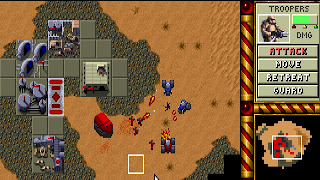
Fun Fact: Dune II (1992) was the progenitor
of the real-time strategy genre.

The self-imposed limits don’t stop there either- some even apply to great movie directors watching films. Fourteen years ago, David Lynch famously went on his tirade about the inferiority of watching
movies on a phone, but these values still hold strong today. Last year, Denis Villeneuve contended that his movie Dune was meant to be seen on the big screen. Even watching the film on a TV, he said, was akin to driving “a speedboat in your bathtub.” And of course, directors like the aforementioned Wright and Tarantino uphold strict rituals about the way they watch movies, keeping lists and giving out their own awards as I mentioned in the previous entry. There’s some common thread among screen legends which leads them to set limitations and rules for themselves and then follow them rigidly. It may not seem to make sense at first glance, but it’s hard to argue with the results. 


➢ LIMITS ON STREAM


I’m a big believer in setting limitations when streaming. I think it helps a creator to more succinctly find their voice and really become unique. What are some values you truly believe in? Let those guide you toward a more authentic stream. Maybe you want to do your shows with only certain types of games, or you don’t like swearing, or you want people in chat to avoid certain subjects. If something is really important to you, it’s worth taking a stand and making that a part of your channel. The only time you should be careful with self-imposed limits is when they begin to affect your ability to go live. Many people set harmful limits for themselves, like not wanting to stream if they haven’t yet purchased the highest quality gear, or waiting until they feel 100% ready before going on the air. These are not creatively stimulating limits, they’re excuses. And you should push past those blockades to create your content anyway. But if there’s a limit that helps to uphold your personal values and might help you to reach new heights creatively, give it a shot! 


For example, I decided a long time ago that I wanted to design all my own graphics. And over the years that’s allowed me to arrive at some pretty fun visual ideas for my streams. I didn’t wait until I had created a ‘full’ graphics package before starting my channel, but instead began with a modest one or two screens, expanding as I went. This allowed me to experiment and see what worked best before making more, and the fact that I began before everything was ‘ready’ meant that my limitation didn’t prevent me from going live. I’ve had a lot of fun making my own stream graphics over the years, and would recommend it to anyone who enjoys the visual arts. You can find more on my philosophy about this in the entry Create Your Own Stream Graphics.  


WHEN LIMITS AREN’T A CHOICE


The Warriors for PS2 did a lot within
the limitations of its hardware.

Limitations aren’t always self-imposed. Kevin Smith made his first movie, Clerks, for the near-non-existent budget of $27,000, paid for on his personal credit cards. (For reference, its sequel twelve years later cost $5 million.) He didn't make his first movie this way because he wanted to see how cheaply he could make a film, it was because he actually just had no money. And this monetary limitation brought limits of other sorts as well- inferior equipment, a single location, and the ability to only shoot in the convenience store where he was employed during his off-hours. But this all worked toward the film’s advantage. Clerks is an indie comedy masterpiece, which shines because of a strong screenplay, clear artistic voice and great characters. None of those things require money or equipment to achieve. And it’s the same on your Twitch streams. You don’t need anything fancy to make something great. Even if your limitations are from financial necessity or circumstance, there’s no reason your shows can’t be amazing when you set your mind to it. 


Of course, I recently focused on the limitations of another great film director in a Twitch Playbook entry as well. Alfred Hitchcock had to contend with the limitations of technology and the very strict film review board of his era. But as you might be able to tell from the entry’s title, Learn From Your Stream’s Limitations, I think those constrictions actually helped him in the end, to think more creatively. So whatever limits you face in your streaming career, don’t let them get you down. Use them to your advantage. Or, if you feel your streams are too bland right now, create a few new limitations and let them guide your channel into a more interesting creative style. Nothing can stop you when you limit your streams like a movie director. 


Friday, January 7, 2022

Learn to Stream from the Silver Screen


Quentin Tarantino, legendary director of films like Pulp Fiction, Kill Bill and most recently, Once Upon a Time in Hollywood, says this about his trade: “You don't have to know how to make a movie. If you truly love cinema with all your heart and with enough passion, you can't help but make a good movie.” If you change a few words from that sentiment, this could easily be used as one of the best quotes about streaming imaginable. All it takes is love and passion. 


At his most voracious, Tarantino on average watched 200 movies a year- and that was at a time before Netflix. He also kept a list of everything old and new he saw, and created his own little personal awards for ones he loved. In the recent Twitch Playbook entry How to Use Your Influences for Streaming, I described a similar devotion to routine in the video game creator Hideo Kojima, who never lets bad reading choices influence his excitement about reading books as a whole. You may recognize a pattern here. Truly talented creators aren’t born with what they have. They absorb. And they don’t do that because they have to, but because they want to. They allow their interests and their quirks to guide them to their creations. In this entry we’ll gather Twitch streaming inspiration through the silver screen, and explore how the best movie directors have been able to use the things they love to create masterpieces. 


➢ WHAT MOVES YOU? 


Guillermo del Toro is a huge fan of Bioshock, 
and it's easy to see why.

The winner for Best Picture at the 2018 Academy Awards was about a woman who falls in love with a giant fish-man. Not exactly the traditional Oscar-bait material, but then again, nothing ever is with director Guillermo del Toro. And that’s what makes him so great. This is a man who thrives on the weird. He lives, literally, in a
house of horrors. His family home is full of classic Universal movie props, life-sized figures of Frankenstein actor Boris Karloff, and other monster memorabilia. Everything he’s ever directed has a strange air about it, something off-kilter that Hollywood typically wouldn’t touch. Each of his films is totally unique, but always distinctly his. Guillermo del Toro has never been afraid to put his passions in the forefront, no matter the stigma that might attach to his works. He never tried to bend his creations toward what might be more acceptable to a common audience- every one of his films is filled with genuine love and obscure sensibilities. And eventually, staying true to himself led to being awarded Hollywood’s highest honor. 


Edgar Wright, who directed Shaun of the Dead, Scott Pilgrim vs. the World and Baby Driver, seems to keep a strict and devoted regimen even in his leisure time. This man has been incredibly busy recently. He released not one but two films in 2021- the time-hopping thriller Last Night in Soho and the incredible music documentary The Sparks Brothers. Despite that schedule however, he found the time to watch 330 films in his free time- nearly one a day! You can find his full viewing list published online, with careful notation to indicate first-time watches and films seen in the cinema. This is someone who clearly loves what he does, enough that he not only creates, but keeps himself disciplined in his regimen of consumption. And if you’ve ever seen an Edgar Wright film, like with Tarantino or del Toro, his overwhelming love for the art form shines through in every scene he’s directed. When producing your Twitch streams, are you allowing all your passions to shine through? Or are you making concessions to ‘the norm’? If the content you want to make doesn’t ‘fit in’ but you’re passionate about the things you love, rest assured that you’re in good company. 


PRIVATE SCREENING


Find streaming inspiration in the movies!

There’s a lot that can be learned from movies when you stream on Twitch. Not only by studying camera techniques and lighting, but also by looking behind the camera. Countless behind-the-scenes resources exist, from DVD special features and books, to following your favorite directors on Twitter. And by paying attention to how the greats treat their craft, it’s easy to become inspired about your own project. Paying attention to the exploits of Tarantino, del Toro and Wright in various forms throughout the years has greatly inspired me personally. And whoever you look up to in the film business, whether it’s a director, screenwriter, editor, costume designer, or anything else, see if you can’t glean some inspiration of your own from the way they approach their craft. There are plenty of rewards to be gained when you learn to stream from the silver screen.