Friday, October 15, 2021

Cut Back on Recurring Stream Costs


As a streamer, one of the most important skills you can cultivate is the ability to manage your spending. After all, if you want to stick with this passion for the long term, you need to make sure it’s financially viable. I truly believe Twitch streaming shouldn’t require you to buy anything at all, and throughout this resource I’ve often suggested honing your ability to solve problems without your wallet. In the recent entry How to Avoid Overspending on Streaming, I explored the psychology of purchasing, and how we can unwittingly find ourselves falling down financial rabbit holes. This time, I want to shed light on the bank account’s silent killer: recurring costs. Anything you regularly spend money on in order to produce your stream should be heavily scrutinized, because the compounding charges of these items can climb much higher than you’d expect. 


In this entry, we’ll explore three major categories of recurring stream costs- subscriptions, essentials, and dependencies- and we’ll consider how you can cut back on each without damaging your content offering. Some of them may require changes of mindset, and a few hard decisions may need to be made, but any change worth making is usually difficult. If you want to keep your streams viable for the long-term, it’s worth looking into your recurring costs. 


➢ THE MONEY VACUUM


Most Twitch streamers pay for a few different subscriptions. This includes online networks like Xbox Live, game memberships like Humble Bundle, game-specific services like MMOs, or Twitch-related tools like chatbots. You may even be paying subscription costs directly to other Twitch channels. Now, there’s nothing inherently wrong with shelling out for any of these things. They can all provide entertainment, utility or support for your friends. But it is worth looking into them, and making sure that there aren’t any unnecessary charges mixed in. 


If you play most of your multiplayer games
on one platform, you may be able to cancel
subscriptions to the others.

For example, I used to be subscribed to both PS Plus and Xbox Live. But eventually, I realized that because I had been mostly playing games on PC, I wouldn’t need either of these subscriptions at all. That allowed me to cut out two yearly subscription charges in a single stroke. For your own channel, there will be different situations and priorities, but you may have a similar revelation. Maybe you don’t really play that one MMO anymore. Or you decide you only need the online benefits for one of your consoles, instead of multiple. Even subscriptions to other Twitch streamers should be examined. It can be prickly to think about pulling the plug on your support of their content, but think about it: if they really care about you, they wouldn’t want you to pay anything you couldn’t afford. Subscriptions are particularly dangerous because they’re so unobtrusive- our credit cards get charged month over month and we forget that it’s happening. Make sure you’re keeping on top of them. Cutting down on a few of these can make a big difference over the course of a year. 



CAN’T STREAM WITHOUT IT


The one thing that everyone needs in order to go live is an internet connection. And while it’s not likely that you’ll be able to remove this subscription from your monthly statement and keep making live content, you may be able to reduce it. It’s possible you’re paying for higher internet speeds than you need. In the entry Getting Your Stream Output Settings Just Right, I helped you to understand how much bandwidth is required to broadcast your shows. I also helped you build a buffer space of bandwidth which can be allocated to other things your household may use the internet for. But anything above this buffer number is likely going unused. Check your internet service provider, and see if they offer different plans. If there’s a lower-tier one which still sits comfortably above your buffer number, it may be worth looking into switching. This could save you a lot of money, without impacting your stream’s performance at all. 


NEEDS VS WANTS


Then there are purchases which aren’t necessarily required to stream, but may feel that way because of the type of streams we produce. Among variety streamers for example, games are the big recurring purchase. It’s common to feel like we need to keep up with all the new releases, lest we be stuck playing something nobody cares about anymore. I’ve been in this position before on previous channels I’ve run, and it can be a very suffocating feeling. It also left a big dent in my bank account every month. So when I started my current Twitch channel, I created a monthly budget in a Google Spreadsheet. Every small or large game I’d buy on a Steam sale was logged. Then, if I didn’t use the full budget at the end of the month, I’d let some spill over into the next. This has allowed me to buy new games in a sensible way, without cutting the practice out altogether. 


I've always been concerned for the main characters
of Dead Island. They drink so many energy drinks!

Many streamers also like to buy supporting items for their broadcasts, usually to increase the overall entertainment value of their shows. This may include food, drinks or props that are used on-camera all the time, like a spicy chip they’ll eat every time someone sends a certain amount of Cheer, or a beer they’ll drink every time they die in Dark Souls. Depending on how often you stream, these kinds of purchases can really start to add up, especially if you begin to build your stream’s identity around needing to have them every time you go live. They also carry the dubious cloud of potential health hazards, so it may be worth considering how you can cut back on aspects of your stream which require you to eat or drink something. 


Lastly, it’s very popular for streamers to buy items to give away during their shows, which can be used to bring in new viewers and cement existing ones. These giveaways can incur some major costs, not only in making the initial purchases, but when trying to send the gift to the lucky winner. You should be wary of giving away any physical item. Shipping can be a killer, especially if it’s international. One easy way to lower costs while still doing giveaways is to limit your prizes to digital content. 


STAY ON TOP


It’s very likely that at least one aspect of your recurring stream costs can be lowered right now. The problem is that we all get so used to these charges, and the benefits they bring, that we begin to tell ourselves we couldn’t possibly remove anything. But with a little creative thinking, you’ll be able to continue getting most (or all) of the benefits for a fraction of the price. When you cut back on your recurring stream costs, your wallet will thank you. 


Friday, October 8, 2021

When Streaming, Show Before You Tell


When creating content on Twitch, motivation is a very valuable currency. Everything we do requires it, and the more we have, the faster we’re able to accomplish our various tasks. Naturally, I place a lot of importance on gathering and protecting this precious resource. Several entries throughout The Twitch Playbook have dealt with concepts like where to find motivation, how to trick yourself into staying motivated, and how to turn that motivation into a habit. This time, I want to dive even deeper into the reasons we lose motivation, and how we can stop it from escaping. Everything comes back to this: when streaming, it’s always better to show before you tell. 


➢ PAGE COUNT


Years ago, I decided I wanted to somehow increase the amount of books I read. There’s just so much out there, and I knew that if I was going to experience more stories, I’d have to make a change. But the problem was, I was already able to read relatively fast. Any difference in the speed at which my eyes traveled down the page wasn’t going to move the needle in a significant way. But then I realized something interesting about my reading habits outside the actual raw speed of my reading comprehension: whenever I told someone about a new book I was reading, the average rate with which I read it got significantly slower. This wasn’t because I read the words more sluggishly, but because I actually picked up the book less frequently. Essentially, every time I told someone I was reading a book, I would lose the motivation to read. 


For witchers, reading can be the difference 
between life and death.

So rather than looking into speedreading techniques, I made one simple change: I would only tell someone about a book I was reading after I had gotten at least 15% through it. This would ensure that I was already a good deal into the story, had become accustomed to the author’s writing style, and had spent some time with the book by myself, before anyone else knew I was reading it. And under no circumstances would I tell someone about a book I planned on reading but hadn’t started yet (aka being 0% through the book) - that always spelled death for my literary motivation. And by making this one simple change, I found that my average reading speed increased dramatically. In the years since, I’ve doubled and then tripled the amount of books I read per month. 


STREAM COUNT


Since discovering this secret of motivation, I’ve adopted the same mindset in many different disciplines of my life. Twitch streaming is certainly no exception. In the entry Stream With a Running Start, I discussed how telling someone about your plans can backfire when you find unexpected hurdles in executing an unproven strategy. In the entry Build Your Twitch Channel Like You’re a Secret Agent, I talked about how revealing your goals to others will activate the same chemicals in your brain that you’d get when actually achieving those goals. But why is this the case? What makes us less likely to finish books or follow through with our Twitch ambitions when we tell others about them too early? 


The best way I’ve found to explain this phenomenon is that it’s all based on perception. Human beings are social creatures. Whether we want to admit it or not, we all measure a lot about ourselves based on how other people perceive us. And when we achieve our goals, it allows us to be perceived in a certain way. For example, after we’ve stuck with our content creation habits and have completed 100 streams, it’s pretty safe to say that we’d be perceived as ‘Twitch streamers.’ When we’re starting out and haven’t done our first stream yet, there’s a gap between where we want to be (someone who streams regularly) and where we are (someone who hasn’t streamed yet). Therefore, we will work hard to close this gap by continuing to move towards our goal. 


It's easy to gossip about your plans, but it's
more rewarding to make them come true.

But there’s another way to be perceived as a Twitch streamer, without requiring all that pesky work. All we have to do is tell someone about our big plans for streaming. The more realistically we can describe and map those plans out, the more likely others are to believe that we’re destined for greatness. In the eyes of these people we’ve told, whether they be family, friends, or our social media followers, we already get to identify as a streamer, even without being one. And at that point, there’s not much motivational fuel left in the tank for actual streaming. 


Keep in mind, I used the prospect of beginning to stream as an example here, but this same logic applies to everything. Do you know anyone who constantly announces big changes for their Twitch channel’s lineup or schedule on Twitter, only to come back and announce new ones a few weeks later? Does this maybe describe you? With a little bit of extra discipline, there’s an easy way out of this endless cycle of broken promises. 


Once you realize that we as human beings tend to focus less on what we actually are, and more on what people perceive us to be, you can come to terms with what needs to be done. When beginning a big project, whether you want to start streaming, change to a new schedule, alter the games you play, or make different kinds of shows, simply start doing it without announcing it to anybody. That way, there’s no way for anyone else to perceive what you’re doing as a new part of your identity, and by extension, no way for you to cash in on that social proof. You’ll be forced to work towards your goals, because there’s no other outlet for your validation. If someone asks on stream whether whatever you’re doing is going to be a new regularly scheduled thing, you can simply say that you’re trying it out. Rather than immediately telling them, “Yeah, this thing I’m trying for the first time is now going to happen every Wednesday!” you can just give the impression that it’s a one-off idea you attempted on a whim. Then, after you’ve done it several times, having worked out the kinks, and (most importantly) having decided whether or not you enjoy doing it, you can announce it as a new part of the schedule. At this point, you will have already been reliably executing on it for a while. In other words, you’ll be 15% through the book. 


MOTIVATE YOURSELF


When reading, streaming, or working on any other project, this strategy has helped me immensely. It’s even possible to use the desire to tell others in the future as a fun motivating factor in itself. Because I look forward to telling someone about a book I’m reading, I’ll put more time into reading it in the beginning, so I can get past 15%. And because I want to create a new scheduled show or interesting recurring concept on my streams, I’ll continue doing it in an unannounced way. This carrot on a stick has consistently been a great way to give me a running start towards any goal. In streaming, as well as in everything else I do, I find that it’s always better to show before you tell. 


Friday, October 1, 2021

Avoid Streaming Dejection


What’s the worst thing that’s happened to you on your streams so far? The closest you’ve been to throwing up your hands and stepping away from your channel? Whether it’s a software glitch, a hardware malfunction, a troublesome chatter, a forgotten setup step, or anything in between, we’ve all had those singular moments in which our whole streaming lives flash before our eyes. At these times, the idea of getting back out there for the next broadcast feels like too much. One small event has the ability to short-circuit our entire creative drive. This is a moment of what I call ‘streaming dejection.’ 


I’ve spoken in previous entries about several such moments I’ve had on my own channel, from blue screens of death and internet outages to being forced to ban longtime chatters who just couldn’t follow the rules. These moments have all been difficult, and they’ve made me reflect on my streaming career, but they weren’t the worst I’ve encountered. This time, I’ll speak about the event that, though somewhat trivial looking back, threatened to damage my will to stream more than anything else. And more importantly, I’ll detail the strategy I employed to avoid streaming dejection. 


➢ AN UNEXPECTED JOURNEY


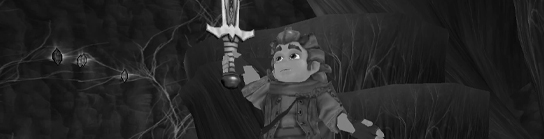
A year or two ago, I was playing The Hobbit video game on stream. This was a delightful PlayStation 2 & Gamecube platformer, with some surprisingly well-executed Tolkien lore and fun adaptational concepts. Having gone through many episodes, taking my time and exploring every nook and cranny, I suddenly came up against a message you don’t want to see while saving your game: “Memory Card error! Data may be corrupt.” This was quite troubling to see, and it became more troubling when I realized that it couldn’t be fixed. Then the thoughts came flooding through my head. What was I supposed to do now? The past sixteen hours of gameplay were lost. Would I play through everything again, subjecting my viewers to another identical playthrough until I reached the point where I left off? Would I try to speed through everything, missing all the collectibles I’d previously gotten and ruin my new character’s progression? Would I play the full sixteen hours again off-stream just to spare the repetition of doing it live? The thoughts continued swirling, and the more I considered these three evils, the less I liked any of them. Strangely, I began thinking it would be better not to stream for a while- the realization that I had wasted all that time was enough to sour my taste for live broadcasting. I had come up against a clear moment of streaming dejection. 


It's best not to react like Smaug when issues occur.

Luckily, I was able to recognize these negative thoughts for what they were, and I knew I had to do something soon. I utilized the strategy that I outlined in previous entries, by simply picking a choice and sticking to it. All three options seemed like nails on a chalkboard to my creative drive, so I just dove in. Before I could think any further about how annoying it would be to replay all the stuff I had already done, I went live again. I started from the beginning (making sure to keep multiple save slots this time) and played through The Hobbit game once more. I decided that I wouldn’t rush things, and would be just as meticulous as I had been the first time around. In collect-a-thon games of that sort, you’re only hurting yourself if you skip all the secret items, after all. And it was interesting- once I got over my initial gloom, I found that I was still having a lot of fun. Even though I was playing through the same levels and doing the same things, I was able to experience them in different ways, and dive even further into the storyline. Plus, now that I knew where everything was, I was able to traverse faster while finding even more secrets than I found before. All things considered, I enjoyed the game even more the second time around. It certainly didn’t factor into my plans to encounter this major detour, but going back through the old content was nowhere near as bad as my mind made it out to be when the issue first occurred. 


OUT OF THE FRYING PAN


Just a week or two ago, this same issue happened to me again. While playing the Xbox 360 version of Assassin’s Creed II through my Xbox One, I found out the hard way that the backwards compatible version of the game has a glitch that deletes your saves when the game shuts down. It's a pretty bad glitch to have, and I suppose this is a cautionary tale not to play that version of Assassin's Creed II. But that time, I lost only about five hours of gameplay. Not too bad, and certainly nothing to complain about when compared with the larger chunk lost from The Hobbit. This time, I didn’t allow myself to think at all. I switched to the PC version and immediately replayed those opening five hours on stream. Since I already had experience with this problem, and the stubborn determination required to combat it, I was able to go back in without even hesitating. Before I knew it, I was back at my old place and was able to continue with the game. 


My console assassinated my save file.

Because I play games from so many different eras on my channel, I’m used to contending with all sorts of weird quirks when saving, setting up visuals, or even just getting them to run in the first place. Usually I’m able to catch whatever problems present themselves, but a few catastrophic errors are bound to slip through the cracks every once in a while. I try to chalk them up as occupational hazards. The important thing is to take these issues in stride. Despite panicking internally when the issue happened during my playthrough of The Hobbit, I was pretty proud of how calm I stayed on the outside. The corrupted save presented itself during my stream after all, so my reaction was being broadcast to everyone watching. This is another example where the techniques laid out in the entry Don’t Panic: A Guide to Facing Stream Problems have really helped me. If I had allowed myself to get overly upset about the loss of data, it would only have compounded the feeling of dejection. 


THE ROAD GOES EVER ON 


What I’ve laid out here have been very specific anecdotes from my own streams, in which I came up against potential feelings of streaming dejection. Though they stemmed from the loss of save data for me, these feelings may come from a totally different place in your own journey. Whether you feel bad after missing scheduled shows, you have trouble with a toxic viewer, your streaming PC crashes, or anything else, just know that there’s a way to come out on top. As I’ve said in various entries before, whenever you feel like you shouldn’t keep streaming, it’s usually best to just go live anyway. It may sound too simple to actually work, but you won’t know until you try. Time and again, I've found that staying in motion is the best way to avoid streaming dejection. 


Friday, September 24, 2021

Keep Your Twitch Goals in Sight


When doing anything related to streaming, I always try to keep one phrase in mind: “Don’t miss the forest for the trees.” The grammar of this one can be a bit of a sticking point for some people, but essentially it means we should be careful not to get so consumed in small details (the trees) that we are unable to see the larger picture (the forest). This practice sounds simple, but it’s easier said than done. Every problem has the potential to lead down a new rabbit hole full of minutiae. This is why I try to remind myself before undertaking any new thing that I should keep a broader perspective before exploring any individual concepts. First, what am I trying to solve? Only then will I consider what it takes to solve it.


➢ DON’T GET SIDETRACKED


Instances where streamers often miss the forest for the trees are quite varied. Tech is a common one, as the purchasing and setting up of new equipment is often misconstrued as a necessary step in getting a stream to improve. This is also one of the most popular reasons that streaming hopefuls never start their channels in the first place, because they get so caught up in the fact that they don’t own the right tech that they convince themselves they can’t go live at all. Social channels are another topic I’ve spoken a lot about before. Expanding into a large presence on other platforms too quickly can majorly gum up the works of any Twitch channel. Splitting your time and attention can only detract from the thing you’re primarily trying to focus on, and you shouldn’t do this until you’re absolutely certain you’ll be able to take on such a task with minimal intrusion. Graphics are another one. Streamers often get extremely focused on how their layouts look, or what their subscriber emotes look like, to the point that they invest more of their time and money into getting them just right than they do with their streams. The same goes for channel merchandise- these can be a huge time sink, often for minimal benefit if your following isn’t large enough. The thing about these topics is that they are all important and useful in their own rights: tech, social platforms, graphics and merch can all majorly help your content to get better. But the important part is how and when you focus on them. If they get in the way of streaming in any way, you probably need to re-explore your priorities. 


HEARING THE CALL


Odysseus was also responsible for the idea
of the Trojan Horse.

In the ancient Greek story The Odyssey, the hero Odysseus and his crew are forced to sail past an island of sirens on their way home from the Trojan War. For anyone who isn’t familiar with sirens, they’re half-bird, half-woman creatures whose song can lure sailors to their destruction. Odysseus knew that passing them would mean trouble for his band, so he came up with an interesting solution. He plugged the ears of every one of his men with wax, so they wouldn’t be able to hear anything. Then, in order to hear their song himself and live to tell the tale, he had himself tied to the mast of his ship. The song would rob him of his senses for a time, but he would be physically unable to do anything self-destructive about it. By using these two strategies, Odysseus and his crew lived to sail another day. 


In my own experience on Twitch, I find that it’s sometimes necessary to explore solutions like these. There are some things I know I can’t resist, and the only way I’m able to avoid them is to remove my ability to engage with them altogether. After a while using personal social media, I realized that it was wasting my time and mostly feeding me negative influences. So I stopped using Facebook, Instagram, Twitter, TikTok and everything in between to focus more on what I actually cared about. Like the sailors who had their ears stuffed with wax to focus on the ship’s navigation, I did the same in order to prioritize my Twitch streams and other life goals. There are two other streaming subjects I’ve historically struggled with in terms of self-control. First, I would spend way too much money buying the newest video games. And second, I would stream for so long that I’d be late for appointments and make others in my life feel like they were no longer priorities. To fix these, I took inspiration from Odysseus himself. Like when he lashed himself to the mast in order to prevent harmful action, I put two strict limits in place. First, I tracked my average monthly spending and never exceeded a modest number. Second, I set a ‘hard out’ for my stream’s ending time, and would never go past it, no matter what. This allowed me to prevent streaming from sabotaging other aspects of my life. And while this may sound like I was de-prioritizing streaming in a certain way, it’s important to consider the bigger picture. If I let streaming kill my finances and relationships, I’d eventually resent the act itself and possibly even give it up altogether. There’s another ‘forest for the trees’ example for you. Sometimes it’s necessary to step back in order to move forward and advance your ultimate goals. 


SOLVE THE UNSOLVABLE 


In certain Middle-earth forests, you may want 
to pay attention to the trees too.

When Alexander the Great entered Phrygia in the 4th Century BC, an oracle had declared that whoever was able to loose an impossibly complex ancient knot, called the Gordian Knot, would become ruler of all Asia. After struggling with the problem for a while, Alexander eventually took out his sword and sliced straight through it. The knot was technically loosed, and Alexander the Great went on to fulfill the prophecy. Nowadays, we use the concept of the Gordian Knot as a metaphor for coming up with easy solutions to complicated problems. Sometimes by thinking outside the box, we’re able to completely bypass many of the steps that may have seemed necessary. I try to apply this thinking to everything I do on Twitch. Anywhere I’m able to save time, money and effort by taking a more efficient route is somewhere I’m able to focus more on actually doing my broadcasts and having fun. In entries like How Low-Tech Items Can Help Your Streams, Simplify Your Streaming Problems, and Reshaping Your Days for Streaming, I helped you to attack your everyday streaming challenges from completely new angles, potentially removing much of the friction that would have been there before. 


I’ve spoken a lot in this resource about the concept of ‘First Principles.’ This involves forgetting everything you think you know about what you’re doing, and breaking the issue down to its simplest components. From there, you can work on a solution from the beginning again, as if you’ve never done it before. This method was originally coined by the modern science community, but Alexander exemplified it without even realizing. The character of Odysseus, with his myriad tricks and solutions, traces back even further. By applying this wisdom of simplicity, you can help your dreams take shape as well. No matter what you’re faced with, always keep your Twitch goals in sight. 


Friday, September 17, 2021

When Streaming, Plan for Reality


When creating our content, it’s easy to get caught in a mindset where we think we have everything figured out. Whether we’ve been spending a lot of time planning and setting up our channel before starting, or we’ve fallen into a groove where we’re able to stream without issues for a while, an overconfident attitude can cause problems if we’re not careful. It doesn’t matter how foolproof a plan seems, how unbreakable a habit, or how solid a rule. Problems can always creep in. In the immortal words of Jurassic Park’s Dr. Ian Malcolm, “Life, uh... finds a way.” Therefore, when streaming, it’s best to plan for reality. 


➢ UP IN THE AIR


Anyone experienced with air travel is familiar with the law against smoking on airplanes. The cabin staff mention this rule several times throughout any flight you might take, and there’s a backlighted ‘no smoking’ sign in front of every single passenger’s seat. Violators also face strict penalties, including large fines, even arrest and detainment. In other words, it’s extremely clear to anyone who steps foot onto an aircraft that they cannot light a cigarette under any circumstances. 


And yet, despite all these rules and penalties, inflight smoking is still accounted for on airplanes. The bathroom, which is the most common place for someone to attempt to smoke on a flight, will still have a built-in ashtray on the next flight you take. And this won’t just be due to the plane being an old model. Ashtrays are actually mandated by the Federal Aviation Administration. They’re so critical in fact, that takeoffs can even be delayed when a lavatory ashtray is missing or out of order. Now, this begs the question: why would this vestigial component still be considered so necessary? Not only is the airline ashtray outmoded, but you’d actually be breaking the law if you used it! 


Unless you're this guy, fire is likely going
to be a problem.

This is because the FAA is looking at the bigger picture. What happens if, despite all these warnings and punishments, someone
does smoke in the airplane bathroom? Placing cigarette butts in the garbage can along with all the paper towels and other trash will cause a cabin fire, which has been known to result in passenger deaths and plane crashes. So the ashtray is there as a way for someone to dispose of their cigarette butts safely, should they decide to break the rules. They’ll still face fines and potential detainment, but they won’t kill everyone on board. This method of planning for reality has always stuck with me, and since I found out about it a few years ago, it’s permeated everything I do. This, of course, includes my Twitch broadcasts. 


CONTINGENCY STREAMING


Despite being a big supporter of pre-stream checklists, careful chat rules, strong habits, and other methods of preparation, I never assume that these things will make my streams infallible. I always try to have alternate options in place, should my plans fall through. 


One of the biggest catch-alls for when problems occur is a ‘Be Right Back’ screen. Being able to cut to something that doesn’t show your camera feed or gameplay is a nice way to have some time to yourself mid-stream, should you need to fix something. I spoke more on this topic in the entry Three Useful Scenes for Your Stream. For the worst problems, there are still solutions which can be reached. In the entry Become a Solution-Oriented Streamer, I took you through a mental exercise to find three separate solutions to one of the worst issues a streamer can face: a lack of internet connectivity. It’s also important to be mentally prepared for the worst, and keep tabs on how you react in the moment. If something happens while you’re live, it can be easy to fly off the handle due to the pressure and embarrassment. In the recent entry Don’t Panic: A Guide to Facing Stream Problems, I focused specifically on staying cool in the moment when something goes wrong. 


In XCOM, backup plans are a way of life.

What about when someone gets out of hand in your chat? Though I’ve gone through several of my favorite ways to moderate chat, establish rules, and measure the reactions of viewers over time, sometimes a viewer simply cannot be reasoned with. In those instances, there’s nothing wrong with timing out or even banning them altogether. When you’ve clearly stated that what they’re doing is not okay, everyone else in chat will understand the circumstances. They’ll likely even be thankful to be rid of the disruption. Other tools like fully clearing the chat, or even setting it to ‘followers only’ mode can prevent some of the more calculated attacks like follow bots or users who create new profiles to get around your restrictions. Typically, these things will go away after a while, and you’ll be able to put things back to normal. 


CUSTOMIZE YOUR PLANS


The things I’ve mentioned so far have been what I’ve found useful when planning for reality on my own shows. But your streams are not the same as mine, and you will face your own problems. Take a moment to think about what you can do if something falls through. Plus, pay attention when problems do happen, and let them inform your contingency plans in the future. When you plan for reality, even your worst problems won’t seem so bad. 


Friday, September 10, 2021

When in Doubt, Stream


What do you do when you’re supposed to go live on a given day, but you just can’t muster up the will to do it? You even have a pretty good excuse lined up, which you plan to tell your community in order to get yourself off the hook. In fact, the more you think about it, why should you go live today? This reason you’ve concocted seems to make more and more sense in your mind the more you think about it, until finally, you convince yourself that there’s just no way you could do your show. These kinds of snowballing thought processes are what typically stop us from creating our content, and they can be very dangerous. The longer we entertain the idea that it might be okay not to go live on a given day, the more it starts to feel normal. And if we succumb to that weakness too many times, we begin to make a habit out of missing our scheduled broadcasts. It’s important to stay vigilant, and trust our long-term goals rather than our short-term desires. If a thought begins to form about how it might be okay to skip a day, it’s usually best to just do the show anyway. 


➢ WORK FOR YOUR DREAMS


There’s a big misconception that goes around, which can stop many people from achieving their life goals: Most people believe that following your dreams shouldn’t feel like work. This likely stems from a ‘grass is always greener’ mentality, in which we work for our entire lives in a monotonous 9-5 grind, and imagine that if we only had the opportunity to do what we loved instead, it would be the exact opposite experience. Now, it is true that there are many benefits to following a passion like Twitch streaming: it’s much more rewarding, usually more entertaining, and it’s something you can call your own. But that doesn’t mean it is entirely without the trappings of work. In addition to the added worries of building something from the ground up, you still need to show up every day, just like you would with a normal job. 


Stay on target.

The fact that nobody is faulting you for missing a day may feel like a benefit, but taking advantage of this will only ever hurt you in the end. In fact, the rigid rules and monotony of clocking in at your workplace is one of the greatest benefits you can bring to Twitch streaming. Channels don’t spring up with huge followings out of nowhere. Streamers need to create a consistency that viewers can rely on over time. This means showing up every scheduled day, whether you feel like it or not. In the entry
How to Stay Motivated About Twitch Streaming, I helped you to stay consistent by using your work schedule as a comparative measurement. It’s okay to take a day off streaming if you really, truly need it, but these should be few and very far between. Don’t let the amount of days you take off from streaming exceed the amount of days you’re allowed to take off from your 9-5 job. By thinking about it this way, you’ll maintain the discipline necessary to keep moving forward. To paraphrase the great prophet Dusty Springfield, wishin’, and hopin’, and thinkin’, and prayin’ isn’t going to get you the results you want. You have to work for the things you really care about. 


KEEP THE DREAM ALIVE


How do you actually press through and go live on those days when it feels like you don’t have enough time or energy? Here’s the answer that most people don’t want to hear: you cut corners. As I talked about in the above-mentioned entry, on some work days you might not feel great and only put in 70% of your maximum effort. You know you’re not going to be at your best, but that doesn’t stop you from showing up. The same should hold true for streaming. Don’t get overly precious about making a perfect show every time you go live. It’s always more important to be there than to be perfect. Cut the show shorter, change the time, switch to a less intensive activity, or do anything else you need to do in order to avoid cancelling the broadcast. As I mentioned in the entry Just Keep Streaming, “There's no stream length too short, no time too late or early, no scheduling excuse that should ever prevent you from streaming. All you should care about is not letting your habit lapse. Anyone can stream when it's easy for them- it's how you face a challenge that defines you.”


AVOID PERFECTION


There’s an excellent story which appears in James Clear’s book Atomic Habits, in which a university photography professor decides to grade two halves of his class on two possible criteria. The first half of the class would be graded solely based on the quantity of their photos, meaning he would literally just count the number of photos they took and give them an A if there were over 100 images, a B if there were 90, and so on. The other group was rated based on quality, meaning these students would only need to submit one single photo, but it was graded based on the composition, lighting, evocativeness, and all the other factors involved in making a great image. Now, based on the objectives of these two groups, you can imagine which half of the class submitted the more artistic and creatively striking work. 


Frank West takes a lot of bad photos,
but he keeps getting XP either way.

Or can you? Because at the end of the semester, the professor found that the group which focused on shoveling out as many photos as possible actually took all the best pictures. And when you think about it, this makes perfect sense. These students were out there getting their hands dirty, making mistakes and experimenting with different ideas. They were honing their photography skills every day. While the quantity group was out there taking hundreds of pictures, the quality group was merely sitting there ruminating on what makes the perfect photo, while doing no practical work. They had a lot of ideas, and only one mediocre photo to show for them at the end of the day. 


Ideas and plans are meaningless if you don’t actually put them into practice. And putting them into practice is similarly meaningless if you don’t do it regularly. If you’re having trouble deciding what game to play on a certain day, just go with whatever comes to mind. If your channel redesign isn’t exactly what you’d hoped for, use it anyway. You can always improve later. Making the wrong choice will never be as bad as making no choice. As I put it in the entry How to Avoid Streamer’s Block, “The only reason we spend time making the decision is because a decision is there to be made.” Just remove the burden of choice, go with the first thing that comes to mind, and go live. 


CREATE YOUR CONTENT


The more content you make, the better you will get at making it. Like with the photography students, only the content that you actually create matters. No amount of thinking or behind-the-scenes work will ever make up for real experience. So don’t let things get in the way, don’t reschedule your show, and don’t wait for perfection to strike. When in doubt, stream. 


Friday, September 3, 2021

How to Avoid Overspending on Streaming


Throughout this resource, I’ve often shared my opinion that you shouldn’t need to buy anything in order to get started with streaming. It’s highly likely that if you haven’t started yet, you already have the tools to go live in some way or another. But just because you don’t need anything in order to start your journey doesn’t mean you should never make a purchase at any point in your streaming career. Eventually, it all comes down to your mindset. Tech upgrades are often seen as fix-all solutions for streaming problems, almost as replacements for skill or experience. Many people also use the need for future purchases as an excuse not to get into Twitch broadcasting, or not to ‘get serious’ about it once they’ve started. These are limiting ways to view streaming, and they’ll make you dependent on spending your hard-earned money in order to go live. But there’s nothing inherently wrong with making stream-related purchases, as long as you’re viewing them from the right frame of mind. The difficult part, once you’ve come to terms with buying things to support your streams, is drawing the line. We’re natural consumers, and making one purchase can end up turning into several more. For many of us, making a few really big purchases or a lot of unnoticeably small ones can cause us to regret our spending habits at the end of the month. In this entry, I’m going to help you avoid overspending on streaming. 


➢ SET AND FORGET


The first thing to consider are expenses which have already been made and can’t be recovered. These are known in the business world as ‘sunk costs.’ If you already have a game console, PC, camera, or anything else used for streaming, these are part of your tool kit. If there are no future payments associated with them, then you don’t need to worry about them anymore. But sometimes, even when they’re already paid for in full, there are certain pieces of tech that almost seem to eat money. Meaning, the more you use them, the more it feels like you need to keep buying things to go with them. This happens to people with DSLR cameras quite often. They will buy the new camera, but then need to get a nicer lens. And when they have the lens, they need better lights to improve the shot. And then various adapters, and a better tripod, and so on and so on. The same thing happens when you get a VR headset and feeling like you need to keep adding accessories, or you splurge on a new microphone only to find that a bunch of other boxes and cables, along with wind screens, mounting arms and sound proofing might come in handy as well. You can see the pattern here. Certain larger purchases often continue biting us after the fact, because we keep getting nibbled on by hidden costs. These smaller supporting purchases can often double the price of the original item, if not more.


COMPARING COSTS


Be careful of hidden costs.

But the idea of ‘gateway purchases’ isn’t exclusive to streaming. This concept lords over every spending decision we make. As Dan Ariely and Jeff Kreisler point out in their excellent book Dollars and Sense, we can’t really measure the absolute value of any item on a day to day basis- we only ever perceive its relative value. Meaning, the value of one item compared to another. Car salesmen use this tactic to make us more receptive toward buying things we don’t really need while we’re on the lot. For example, we may be reluctant to spend a few hundred dollars on a stereo system if we saw it in a shop window while walking down the street, but when we’re already spending thousands on a car, that add-on feels like a drop in the bucket. It’s also why big box stores will show you the original price of an item next to its new lower cost while it’s on sale. Even when those ‘sales’ are happening almost every day of the year, and the items can be bought for that price more frequently than not, we’re still more likely to buy it when we see what it used to cost. It’s all because of how we perceive ‘relative value.’


This was never more apparent than when the department store J.C. Penney hired a new CEO in 2011, who introduced his ‘fair and square’ pricing concept. Under this new management, the stores eliminated the concept of something ‘going on sale,’ and instead just sold everything at the lowest possible sale price all year round. This seems like a nice idea, right? Everyone gets the same low price no matter what. The problem is, people didn’t want to get the same low price as everyone else. In one year, company profits dropped by a staggering 32%. The season in 2012 when those sales numbers were announced has actually been described as “the worst quarter in retail history.” The CEO was fired, and sales and coupons were quickly readopted into the usual routine. The moral of the story is that people want to feel like they’re smart or special for spotting a deal. We’ll even accept the inconvenience of coupons and timed offers, just to get that feeling. And none of us are completely immune to the siren’s call. I know I personally have an insane amount of video games accumulated over the past 15+ years of owning a Steam account that I’ll never get to play, which I only bought because they were 90% off during some sales event. I knew in the back of my mind at the time that I wanted to play those games, and bought them so they’d be available to dig into on some rainy day. Meanwhile, most of them have been collecting digital dust since I clicked the ‘Checkout’ button years ago. A similar thing happens on Black Friday and other major tech sales events. Sometimes we have a single specific thing we need to get during these sales, but most of the time we’re coerced into buying things just because we see that they’re going to cost less than they used to for a few hours. So be careful of sales, coupons and other deals. They can be useful if you’re buying something you’ve needed since before the discount, but they can be killers when you let yourself be tempted by the things you only want because of the new price. 


LOWER YOUR SPENDING


So again, while it’s fine to buy things you need for streaming, don’t let those purchases lead you down a rabbit hole. For those who have recently started working from home, it may be especially tempting to make a bunch of new purchases to pass the time. But ultimately, it’s best to know what you’re trying to achieve on stream, and limit yourself to only the things that will allow that to happen. You should be able to get in a few dozen (or if you’re like me, a few hundred) broadcasts between making any major channel purchases. This will not only ensure you’re getting your money’s worth from each new piece of tech, but it’ll also help you to slow down and reflect on what you need for your channel. You may find new solutions that you wouldn’t have arrived at if you merely made a bunch of quick purchases without thinking. So avoid overspending on your channel, and let yourself focus on streaming for its own sake.